

Google Marketing Live 2026
Google Marketing Live 2026: What Google Ads Teams Should Review First
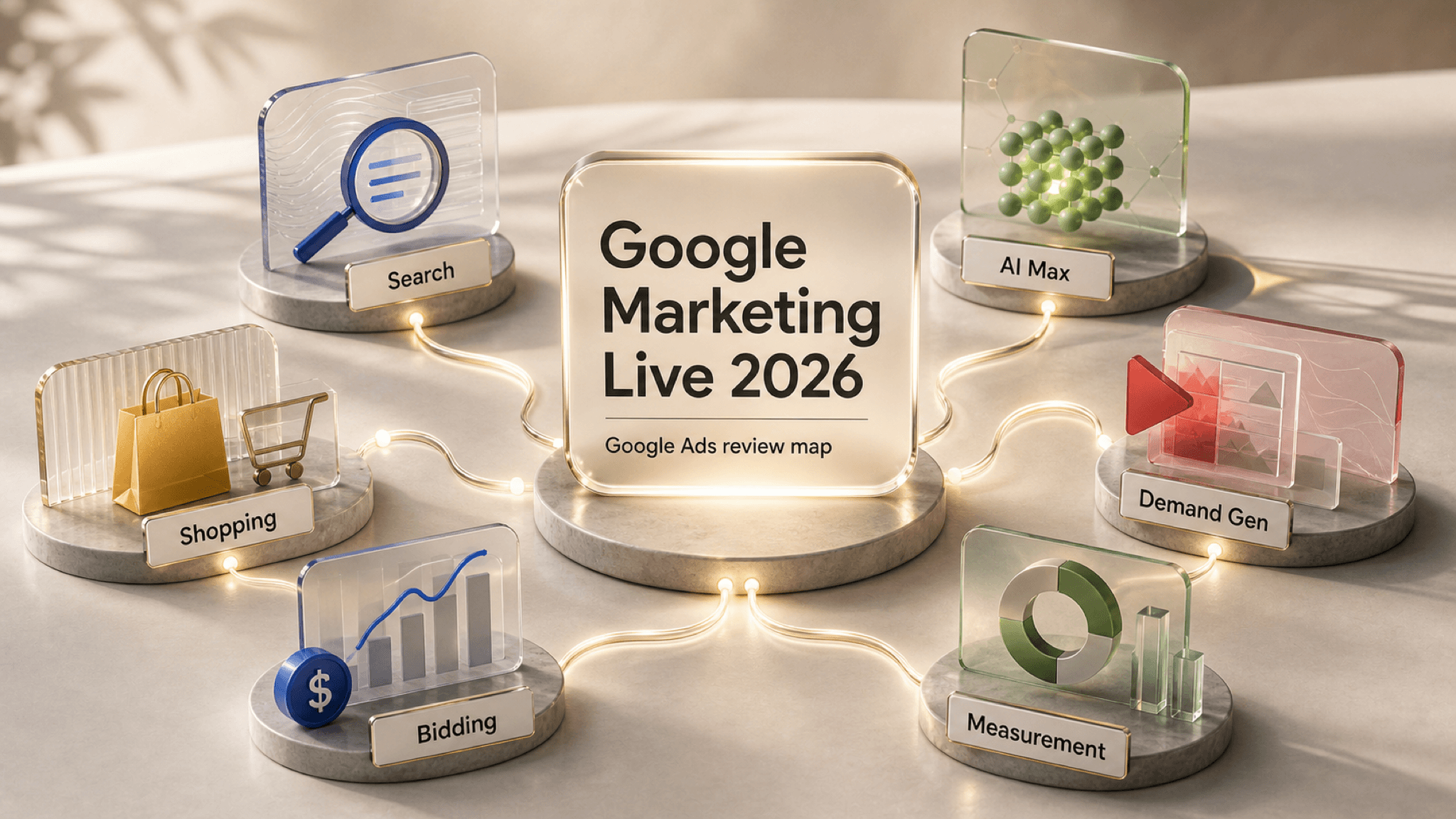
Priority guide for turning Google Marketing Live 2026 announcements into Search, commerce, creative, bidding, data, and measurement review work.
Google Marketing Live 2026 changed Search, Shopping, Demand Gen, bidding, and measurement. This guide names the account checks to run before spend or client plans move.
Key takeaway
Google Marketing Live 2026 matters for Google Ads teams because Google moved more Search, Shopping, Demand Gen, Smart Bidding, creative, data, and measurement work into AI Mode, AI Max, Merchant Center, Data Manager, Meridian, and Google Analytics 360.
The first response should not be turning on every new feature. Teams should review Search and AI Mode readiness, AI Max and Dynamic Search Ads exposure, Merchant Center product data and offers, Demand Gen creative inputs, Smart Bidding and budget guardrails, first-party data, and finance-facing measurement.
Parallel can keep that response tied to account context: campaign findings, reports, client notes, approval notes, and the human-reviewed Google Ads changes that follow from the GML updates.
Google Marketing Live 2026 is an inputs story for Google Ads teams: the campaigns, feeds, conversion actions, budgets, assets, and measurement sources behind automation now determine how much expansion is safe.
- Each feature was checked against the account's current campaign mix, conversion setup, product data, and reporting responsibilities.
- Availability details were confirmed before any Search, Demand Gen, Shopping, bidding, or measurement setup change was recommended.
- The event recap was turned into a prioritized review plan for spend, lead quality, creative inputs, Merchant Center data, first-party signals, and finance reporting.
The main Google Ads message from Google Marketing Live 2026 was not a single feature launch. It was a broader shift across AI Mode ads, AI Max for Search campaigns, commerce experiences, creative, Smart Bidding, data, and measurement.
Google's public recap grouped the updates across Search, YouTube, measurement, commerce, apps, creative, AI-assisted shopping, and lead experiences. For Google Ads teams, the account review now spans how Search campaigns find demand, how Demand Gen assets are produced, how Merchant Center product data supports Shopping experiences, how budgets respond to demand, and how measurement explains the outcome.
The practical judgment is sequencing. Search reach, AI Max controls, Product feeds, conversion actions, Campaign budgets, and reporting sources should be checked before a team changes spend or presents the GML updates as a performance plan.
GML is an inputs story before it is a features story.
Google documentation·Accelerate with Google
Google Marketing Live 2026 official recap
Google's public recap organizes the May 20 updates across Search, YouTube, measurement, commerce, apps, creative, and AI-assisted shopping and lead experiences.
Open Google recapThe highest-risk inputs are the ones that can change spend quality, brand representation, checkout paths, and executive reporting before the team has a clean explanation.
| Area | What to review | Why it matters |
|---|---|---|
| Search and AI Mode | Search terms, landing pages, AI Max eligibility, Performance Max overlap, and business rules for new AI-powered ad formats | Search reach can expand faster than the team can explain it if account context and landing-page quality are weak. |
| AI Max and Dynamic Search Ads | Dynamic Search Ads exposure, automatically created assets, campaign-level broad match, text customization, final URL expansion, and brand controls | Google has announced a September automatic upgrade path for eligible legacy settings, so teams need a migration view before account-level surprises. |
| Shopping and Merchant Center | Merchant Center product data, Product feeds, Promotions, Direct Offers, checkout links, Google Pay paths, and margin rules | Commerce updates depend on product data and checkout quality, not only campaign settings. |
| Demand Gen and YouTube | Video assets, creator assets, Product feeds, Demand Gen reporting, and creative review rules | AI-assisted creative and new YouTube surfaces increase the need for stronger asset and conversion-quality review. |
| Bidding, budgets, and lead quality | Smart Bidding, Target CPA, Target ROAS, campaign budgets, campaign total budgets, offline conversions, and qualified-lead definitions | More automation only works when the conversion actions and budget constraints match the business outcome. |
| Data and measurement | Google tag, Data Manager, Google Analytics 360, Meridian, offline revenue, and finance-facing reporting | Leadership will ask whether broader automated reach is profitable; the answer depends on measurement quality. |
Open the Google Ads account overview
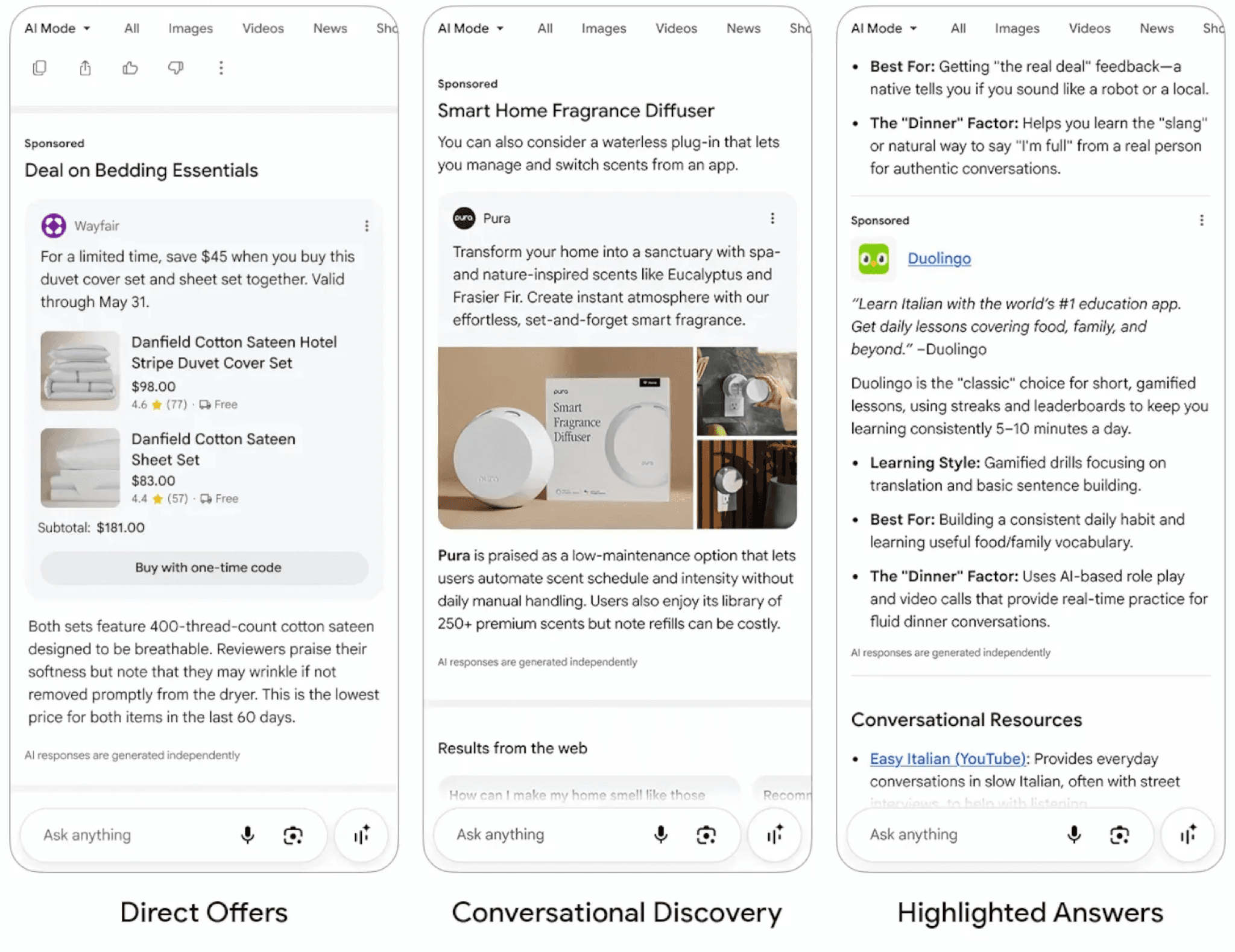
Google's Search post says it is testing new ad experiences built with Gemini, including Conversational Discovery ads and Highlighted Answers in AI Mode. It also describes AI-powered Shopping ads and Business Agent for Leads as part of next-generation Search experiences.
For advertisers, the immediate question is not whether every account should chase every format. It is whether Search campaigns, AI Max, Performance Max, landing pages, product data, lead-capture paths, and conversion actions are clean enough for a broader AI-assisted Search environment.
Review landing pages that AI Max or Performance Max could use when final URL expansion is enabled. Compare Search terms and conversion quality before interpreting new reach as useful incremental demand. Keep consumer-facing AI Mode tests separate from confirmed setup steps visible in the Google Ads account.
Search reach is only an opportunity when the account can explain what expanded.
Google video·Accelerate with Google
Prepare your campaigns for the new era of Search
Google's official Google Marketing Live follow-up session gives Search teams a current baseline for AI Max, Performance Max, and AI-era Search planning.
Google reference·Accelerate with Google
Ads in AI Mode examples
Google's public Ads in AI Mode page shows example ad placements inside AI Mode Search experiences.
Google announced that AI Max for Search campaigns is moving out of beta and that campaigns using Dynamic Search Ads, automatically created assets, and campaign-level broad match settings will automatically upgrade to AI Max starting in September for eligible campaigns.
That makes AI Max a migration and governance issue, not only a growth feature. Teams should know which campaigns use Dynamic Search Ads, which rely on automatically created assets, where campaign-level broad match settings exist, and which landing-page or brand controls need to be reviewed before the upgrade path reaches the account.
01
Inventory legacy settings
List Search campaigns using Dynamic Search Ads, automatically created assets, and campaign-level broad match settings.
02
Check URL and text controls
Review final URL expansion, text customization, text guidelines, brand controls, and landing-page exclusions.
03
Decide the test path
Use experiments or staged rollout rules where available instead of accepting account-wide surprises.
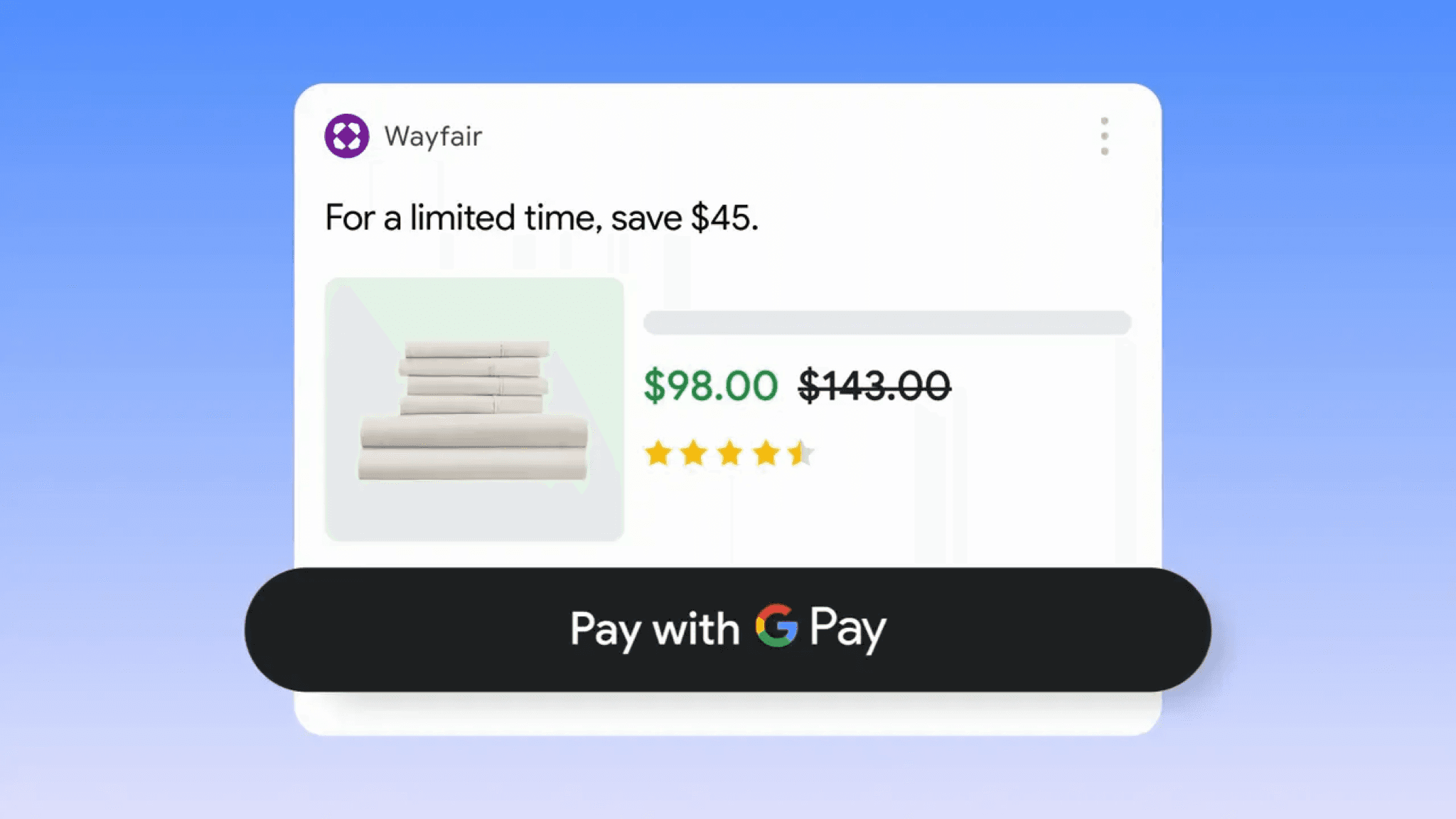
Google's Shopping update describes Universal Commerce Protocol features, Universal Cart, Google Pay checkout paths, and new Merchant Center tools for the agentic commerce era. The Search announcement also expands Direct Offers with more offer types, promotion bundling, native checkout for UCP merchants, and travel expansion.
The implication for ecommerce teams is clear: Merchant Center product data, Product feeds, Promotions, checkout links, landing pages, and margin rules need the same discipline as campaign settings. AI-powered Shopping experiences will only be as reliable as the feed, offer, and checkout inputs behind them.
Product feed quality
Review titles, descriptions, images, availability, pricing, variants, and Merchant Center diagnostics before relying on AI-powered Shopping presentation.
Offer and checkout quality
Confirm promotion eligibility, checkout-link reliability, Google Pay paths, return-policy language, and merchant-of-record implications.
Measurement and margin fit
Tie Shopping and Direct Offers tests to revenue quality, margin thresholds, and post-click conversion reporting.
Google reference·Accelerate with Google
Direct Offers example
Google's public Google Marketing Live recap includes Direct Offers imagery for commerce and checkout readiness context.
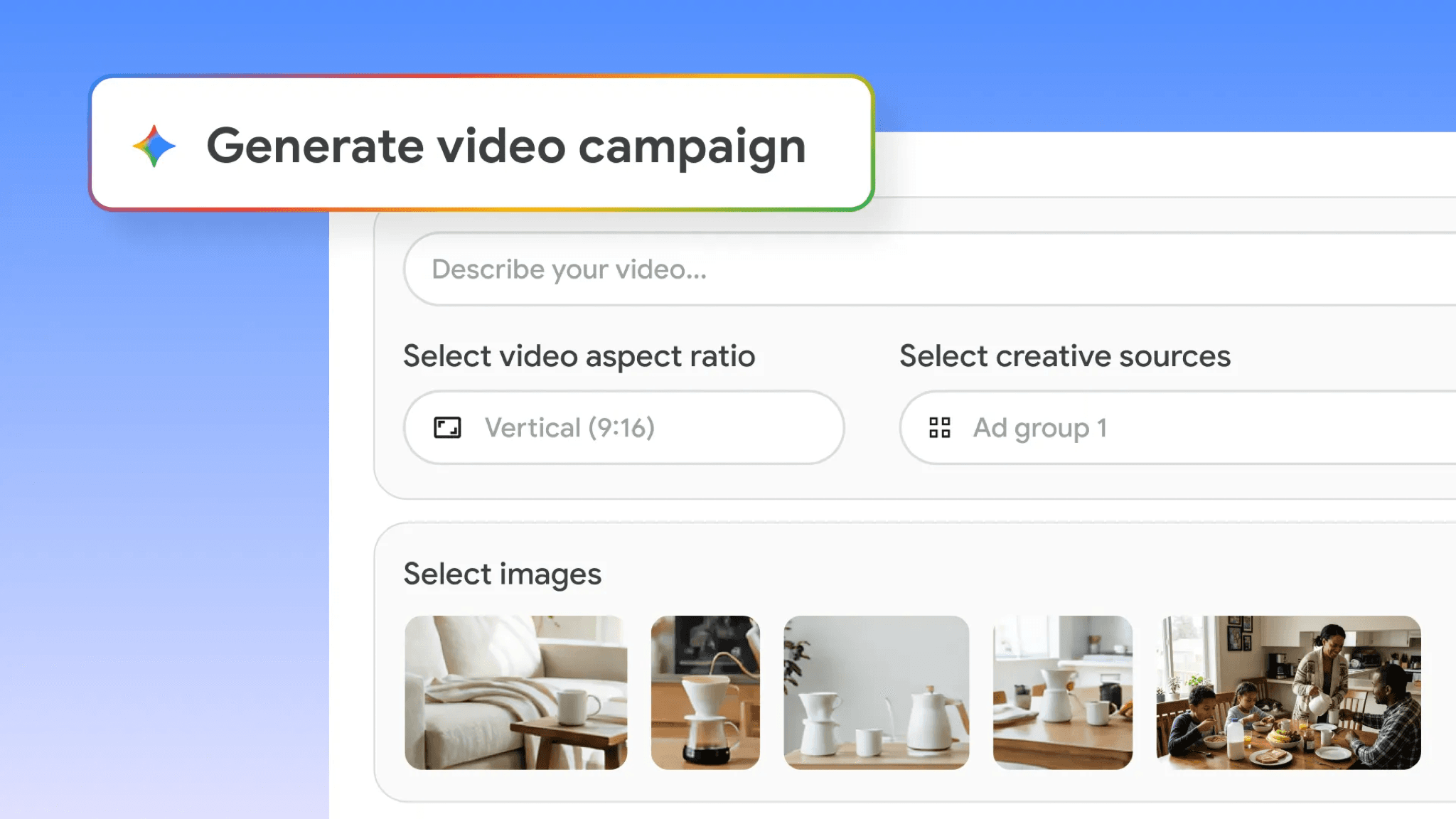
Google's Demand Gen and YouTube coverage points toward more AI-powered relevance, creative enhancement, creator and product-video opportunities, and better ways to evaluate Demand Gen performance on YouTube.
The risk is not only low-quality creative. It is unclear ownership: who approves generated video assets, which Product feeds can be used, how brand and legal review works, and how Demand Gen conversion quality is compared with Search, Shopping, and Performance Max.
Document which image, video, creator, and product assets are approved for Demand Gen and YouTube campaigns. Review Demand Gen conversion reporting beside downstream quality, not only platform-reported conversion volume. Write a rule for when AI-assisted creative can be tested, paused, reused, or escalated for brand review.
Creative scale without review rules is just faster rework.
Google video·Accelerate with Google
Drive ROI with Google AI-powered Video campaigns
Google's official YouTube and video campaigns session gives Demand Gen teams current context on AI-powered reach, view, and full-funnel video planning.
Google reference·Accelerate with Google
Multimodal Video Creation in Asset Studio
Google's public Google Marketing Live recap includes Asset Studio imagery for AI-assisted creative and video asset planning.
Google's bidding and budgeting post describes journey-aware bidding in beta, expansion plans for Smart Bidding Exploration across Performance Max with product feeds and Shopping campaigns, and demand-led pacing for more flexible budget behavior.
These updates increase the importance of conversion hygiene. If primary conversions, secondary conversions, offline conversions, enhanced conversions for leads, qualified leads, and converted leads are loosely defined, Smart Bidding can optimize toward volume that looks good in Google Ads but does not match revenue quality.
| Decision | Check before changing campaigns |
|---|---|
| Target CPA or Target ROAS tolerance | Confirm the acceptable efficiency range and the rollback threshold before expanding reach. |
| Journey-aware bidding | Confirm which biddable and non-biddable conversion goals represent the real lead-to-sales journey. |
| Demand-led pacing | Confirm campaign total budgets, average daily budgets, finance expectations, and seasonality assumptions. |
Google video·Accelerate with Google
Maximize your ROI with the Google Ads Budget Blueprint
Google's official Budget Blueprint session is useful context for budget flexibility, demand-led pacing, and the review needed before broader Smart Bidding changes.
Google's measurement coverage describes Data Manager map views, Data Manager API expansion, Google tag upgrades, Meridian GeoX, and broader Meridian partner work. Google also announced Analytics and Meridian updates that connect measurement, budgeting, and advanced modeling.
That makes first-party signal readiness one of the highest-leverage reviews after Google Marketing Live. Google Ads teams should know which systems feed conversion actions, which offline conversions are trusted, whether Google tag coverage is complete, and whether finance-facing reports can explain incrementality and budget movement without overstating certainty.
Signal ownership
Name who owns Google tag coverage, Data Manager connections, CRM fields, offline conversion uploads, and diagnostics.
Measurement language
Define how the team explains attribution, incrementality, Meridian modeling, and uncertainty to finance or leadership.
Reporting readiness
Prepare a report that separates confirmed platform metrics from business-quality metrics such as qualified leads, converted leads, revenue, margin, and store sales.
Google video·Accelerate with Google
First-party data strength for Google AI
Google's official Data Strength session explains how first-party data, Data Manager, and Google Tag Gateway support stronger Google AI performance.
Google reference·Google Ads & Commerce Blog
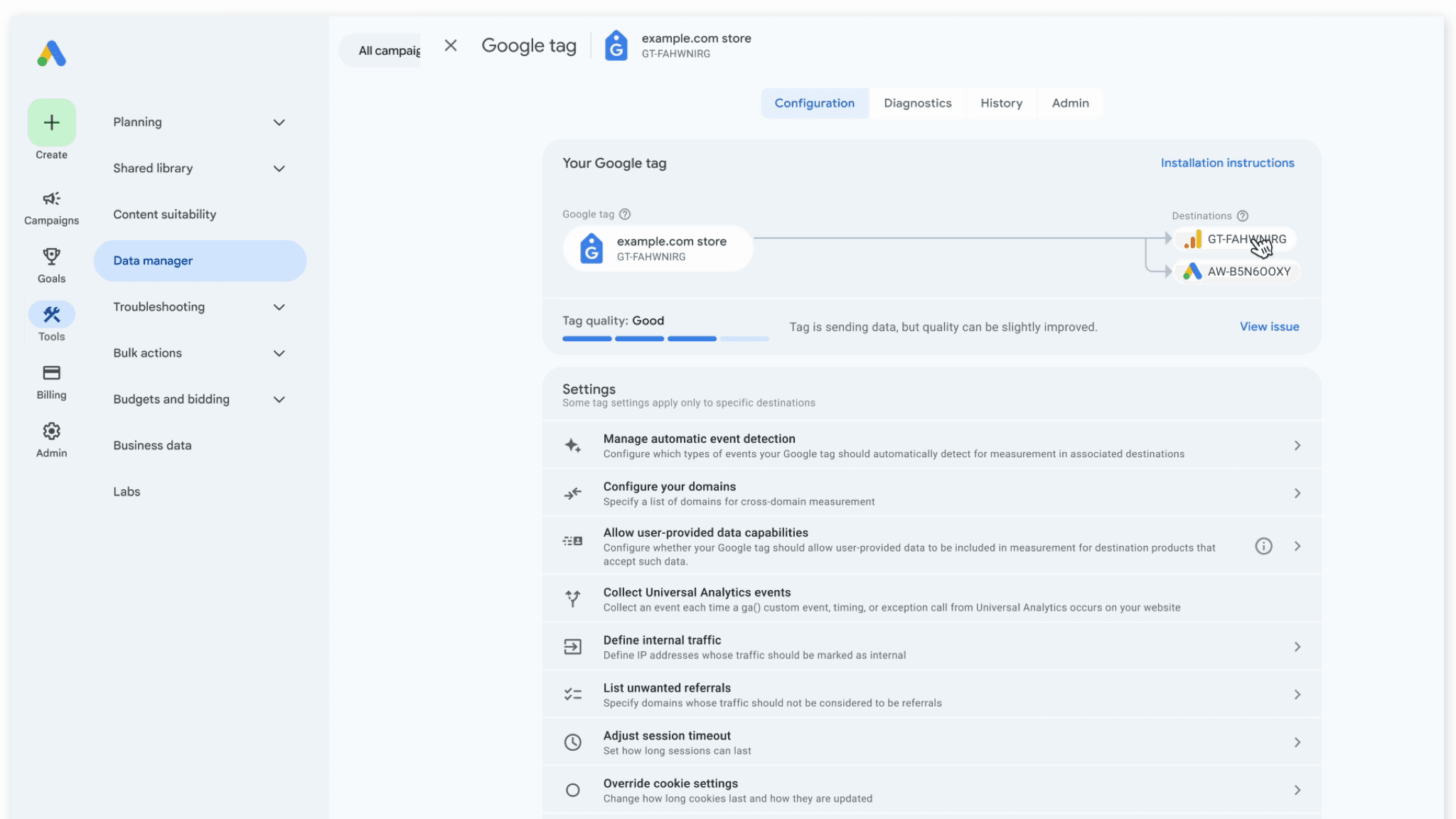
Data Manager product footage
Google's public Google Marketing Live measurement post includes Data Manager product footage for the first-party data and measurement discussion.
Google Marketing Live creates a lot of account-review work at once. One team needs to interpret the updates, review campaigns, document risk, brief clients or leadership, and decide what should change in Google Ads.
Parallel AI reads Search, Merchant Center, Demand Gen, first-party data, and measurement context from the connected account, writes the GML priority review in a doc or spreadsheet, and drafts any Google Ads change for a person to approve before it ships.
The strongest GML response stays connected to finished account work, not a recap deck.
Some GML 2026 details are intentionally rollout-limited. Treat those details as planning inputs until Google publishes deeper setup or availability guidance.
- Do not assume every announced Search, AI Mode, Direct Offers, Business Agent for Leads, or AI-powered Shopping experience is available in every account.
- Do not treat beta language, coming-weeks language, or selected-advertiser language as full general availability.
- Do not assume API, reporting, eligibility, or setup details until Google Ads Help, Merchant Center Help, Google Analytics Help, or developer documentation confirms them.
- Do not turn on broader automation before conversion actions, feed quality, landing pages, budget guardrails, and brand review rules are ready.
Google documentation
Google's official public recap for Google Marketing Live 2026 announcement themes across Search, YouTube, measurement, commerce, apps, creative, AI-assisted shopping, and lead experiences.
Google Ads and Commerce post on Gemini-built Search ad formats, AI Mode ad tests, AI-powered Shopping ads, Business Agent for Leads, and Direct Offers expansion.
Google Ads and Commerce post describing the September 2026 automatic upgrade path for eligible Dynamic Search Ads, automatically created assets, and campaign-level broad match settings.
Google Ads and Commerce post on AI Max expansion to Shopping campaigns and travel-specific formats, plus AI Brief and text guidance updates.
Google Shopping post on Universal Commerce Protocol features, Universal Cart, Google Pay checkout paths, and new Merchant Center tools.
Google YouTube post on Demand Gen updates, YouTube performance, creative improvements, and measurement context.
Google Ads and Commerce post on journey-aware bidding, Smart Bidding Exploration, campaign total budgets, and demand-led pacing.
Google Ads and Commerce post on Data Manager, Data Manager API, Google tag upgrades, Meridian GeoX, and Meridian Studio.
Google Marketing Platform post on Meridian and Google Analytics 360 measurement updates announced at Google Marketing Live 2026.
Google Ads and Commerce post on Ask Advisor and AI-powered help across marketing surfaces.
Google Ads and Commerce post on Asset Studio and AI-powered creative updates.
- Blog homeBrowse every published Google Ads guide from one editorial index.
- Google Ads AI agent: complete guideThe pillar guide covers the category definition, the adoption model, and where the agent fits real Google Ads work.
- ResourcesMove between the definition page, pricing, product walkthrough, and trust pages.
- About Parallel AISee the company mission, editorial standards, and operating principles behind the product.
- SecurityReview the public data-handling, account-connectivity, and approval-control framing used throughout the published guides.
- Author profileSee the background, specialties, and editorial responsibilities behind the published guides.
- Editorial reviewReview how pricing, trust, and capability claims are checked before public content ships.
- AI Max Expansion After GML 2026: What to Audit Before You Adopt ItHelpful when Google Ads teams need to audit AI Max readiness without losing account-level review and approval.
- AI Mode and AI Max Readiness Checklist for Google AdsHelpful when Search automation is on the roadmap but the account still needs measurement, copy, landing-page, and budget readiness checks.
- Direct Offers in AI Mode: Retail Pilot Readiness for Google AdsFor ecommerce teams testing Direct Offers when economics and feeds must keep the public promise.
- Demand Gen for B2B and Ecommerce: Diagnose Quality Beyond CTRHelpful when CTR looks strong but B2B pipeline or ecommerce ROAS tells a different story.
- Google Ads Data Manager: First-Party Data Source ReviewFor marketing and RevOps teams where list uploads outpace stewardship and match rate monitoring.
- Google Ads Budget Pacing Update 2026: What Changed and What HoldsHelpful when spend looks front-loaded after the 2026 pacing changes and the team needs to decide whether the curve is healthy, risky, or escalation-worthy.
- Smart Bidding Exploration for Performance Max and Shopping: Test PlanFor teams enabling Exploration on Search today or preparing for rollout-limited Performance Max and Shopping expansion.
- Google Ads AI Agent for Agencies: Reviews, Reports, and ControlsFor agencies that need a repeatable multi-account review and reporting model that cuts rework without loosening approvals.
- Google Ads AI Agent for Ecommerce: Search Terms, Shopping, and PMax ReviewFor when Search, Shopping, Merchant Center, and Performance Max need one ecommerce review instead of separate meetings.
- Browse the GML 2026 resource hubBrowse the Google Marketing Live 2026 resource hub for the related Search, AI Max, Shopping, Demand Gen, bidding, data, and measurement guides.