

First-Party Data
Google Ads Data Manager
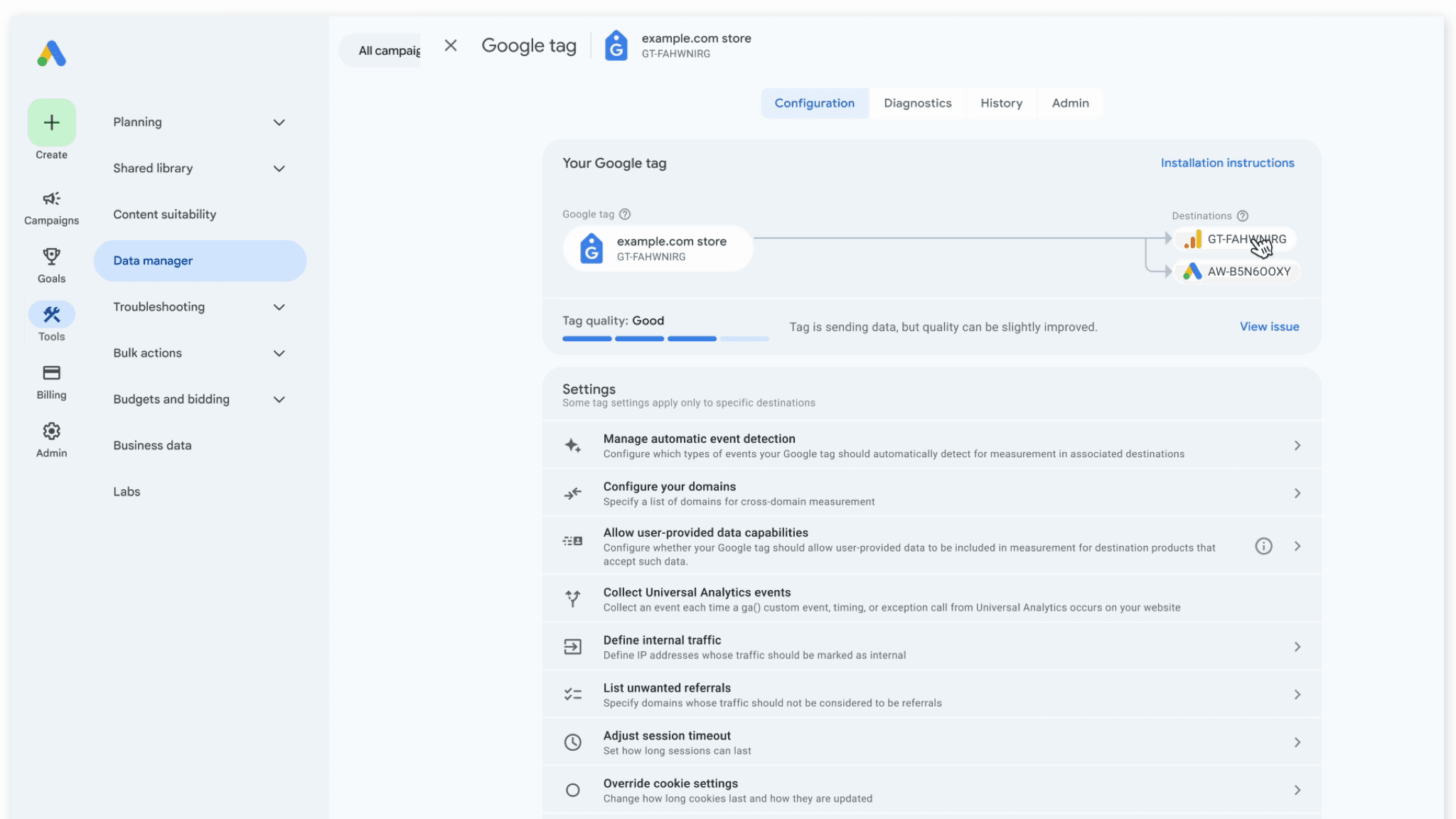
Official Google Marketing Live 2026 Data Manager video still from Google's public measurement post.
First-party data becomes an asset only when consent, freshness, and match rate have named owners in Google Ads Data Manager before Customer Match or imports scale.
Key takeaway
Marketing uploads a Customer Match list Friday afternoon and expects Monday prospecting to improve. By Wednesday, match rates sit below plan and nobody can say who owns refresh cadence or consent documentation. Google's Customer Match Help page describes list membership duration, minimum size rules, and Smart Bidding auto-inclusion behavior. Data Manager can simplify connection, but connection is not stewardship. First-party data becomes an asset only when consent basis, field formatting, refresh schedule, and match rate monitoring have named owners before campaign teams depend on the feed.
The reframe is ownership before activation. Separate Customer Match, conversion imports, remarketing, reporting, and Smart Bidding use cases in the same source review doc. Google's Data Manager API documentation recommends Customer Match workflows through Data Manager for improved developer experience. Parallel AI reads the connected account, writes the source roster in a doc or spreadsheet with use case and owner rows, and drafts audience or import notes for a person to approve.
Checked against current product behavior, account-review tools, and official Google materials so the explanation matches the real review process and live product boundaries.
- Google's Customer Match Help page defines list membership duration, minimum active members, and Smart Bidding auto-inclusion rules.
- Google's data sources and product linking Help pages supply Data Manager connection context separate from ongoing stewardship.
- Parallel's role stays limited to connected account review, finished source rosters, and drafted changes held for human approval.
Data Manager makes first-party connection feel finished when the link goes green. Campaign teams experience the same data as unfinished when match rate decays, consent questions surface in legal review, or CRM field names change without a mapped owner. The asset is not the file. The asset is the maintained relationship between your customer records and Google's matching rules.
DEFINITION
First-party data stewardship
Named ownership of consent basis, field formatting, upload or sync cadence, match rate monitoring, and campaign use case for each source connected through Google Ads Data Manager. Google's Customer Match Help page requires lists to maintain minimum active membership on a 540-day horizon and recommends regular refresh through CRM sync or manual upload.
Google Ads Help: About Customer Match
The tension is marketing velocity versus data liability. Paid media wants audiences this week. Legal and analytics want proof of consent and stable keys. Without a roster, the same CSV becomes everyone's dependency and nobody's job.
Google's Customer Match documentation notes that Smart Bidding and optimized targeting may auto-include eligible lists unless accounts opt out through documented steps. Stewardship includes knowing which lists bid implicitly, not only which lists target explicitly.
Use case separation prevents category errors. A list acceptable for reporting may be unacceptable for Customer Match prospecting. A CRM export formatted for offline conversion imports may fail Customer Match hashing rules. One source doc should list each use case with yes, no, or limited.
Illustrative roster row: CRM purchase file, owner RevOps, weekly sync, consent basis documented in privacy policy section 4.2, match rate reviewed every Monday, Customer Match yes, conversion import yes, Smart Bidding exposure noted. Numbers are illustrative. The mechanism is writing the row before scale.
EU consent policy requirements for Customer Match upload partners apply when using third-party upload paths per Google's Help documentation. Ownership includes passing required consent signals, not only formatting emails correctly.
Separate roster rows for each upload path when marketing uses both in-platform uploads and API or partner pipelines. Different paths carry different consent obligations even when the underlying CRM file is the same.
Hold activation when legal has not confirmed the use case column. A list cleared for remarketing on owned inventory is not automatically cleared for prospecting expansions without its own review row.
An unowned list is a liability wearing a targeting label.
Once ownership is named, the weekly review tracks consent documentation, freshness against the 540-day membership horizon, and match rate trend. Missing any one converts first-party data back into a project.
Google recommends regular Customer Match refresh through CRM sync or manual upload. Freshness is not vanity. Lists that fall below minimum active members stop serving and silently remove a signal Smart Bidding may have learned against.
Match rate drops often trace to field hygiene: personal email prevalence, phone formatting, or hashing mismatches described in Google's Customer Match formatting articles. Stewardship assigns a fix path before campaign teams interpret audience shrink as creative fatigue.
Conversion import stewardship adds timing. Offline events that arrive after the conversion window configured on the action look like performance miracles or disasters in the wrong week. Lag belongs in the same doc as consent.
RevOps and paid media should share one match rate chart in the weekly standup during activation month. Visibility beats post-mortems when list quality decays quietly.
Stewardship metrics by use case.
| Metric | Customer Match | Conversion import |
|---|---|---|
| Consent | Documented basis and partner signals if applicable | Transaction or lead consent aligned to event type |
| Freshness | Refresh inside 540-day membership window | Import latency within sales cycle lag assumptions |
| Match rate | Monitor list size and matched users trend | Monitor matched versus uploaded offline events |
| Smart Bidding exposure | Note auto-inclusion and opt-out status | Confirm primary action used for bidding |
Review Customer Match list status and membership
With the template set, each new or refreshed source passes the same gate before Customer Match, imports, or bidding exposure expands.
Record owner, consent basis, and approved use cases in writing. Legal and marketing should share one row, not parallel spreadsheets.
Validate field formatting against Google's Customer Match or offline conversion requirements before upload. Fix keys at source rather than in the Google Ads UI.
Set refresh cadence and calendar reminders inside the 540-day membership window for Customer Match lists.
Monitor match rate or import match trends weekly during the first month after activation and monthly thereafter.
- Document owner, consent, and use case before first upload.
- Validate hashing and field formats against Google requirements.
- Schedule refresh inside Customer Match membership windows.
- Track match rate weekly during the activation month.
Activation without a roster is how first-party data becomes folklore.
Activate when ownership, consent, formatting, refresh cadence, and match rate meet the bar for the named use case. Limit when the source is reliable for reporting but not yet bidding-grade. Hold when consent, ownership, or match quality cannot be confirmed.
Activate when
- Owner, consent basis, and approved use cases are documented.
- Formatting passed validation and refresh cadence is scheduled.
- Match rate or import match trend is stable through one full review cycle.
Hold when
- Consent basis is unclear for Customer Match or import use.
- Nobody owns refresh inside the 540-day membership window.
- Match rate dropped without a diagnosed fix path.
First-party data review is a connected-account workflow Parallel AI supports well. The agent pulls audience and conversion action context, merges CRM or upload notes your team maintains, and writes owner, consent, refresh, match rate, and use case rows in a doc or spreadsheet shared across marketing, analytics, and RevOps. If the call is to pause a list, narrow targeting, or draft import fixes, it waits for a person to approve that change. Uploads without roster rows recreate the same match rate argument every quarter. See for connection health. On Monday morning, open Customer Match list status, log match rate versus last week, and send one activate, limit, or hold line per source before anyone expands prospecting spend.
Use the current Google videos, Help pages, public announcements, and product visuals below to confirm availability, setup details, and reporting limits.
Google video·Accelerate with Google
first-party data strength for Google AI
Google's official Google Marketing Live follow-up session explains how first-party data, Data Manager, and Google Tag Gateway support stronger Google AI performance.
Google reference·Accelerate with Google
Google Tag Gateway
Google's public Google Marketing Live recap includes Google Tag Gateway imagery for first-party measurement coverage.
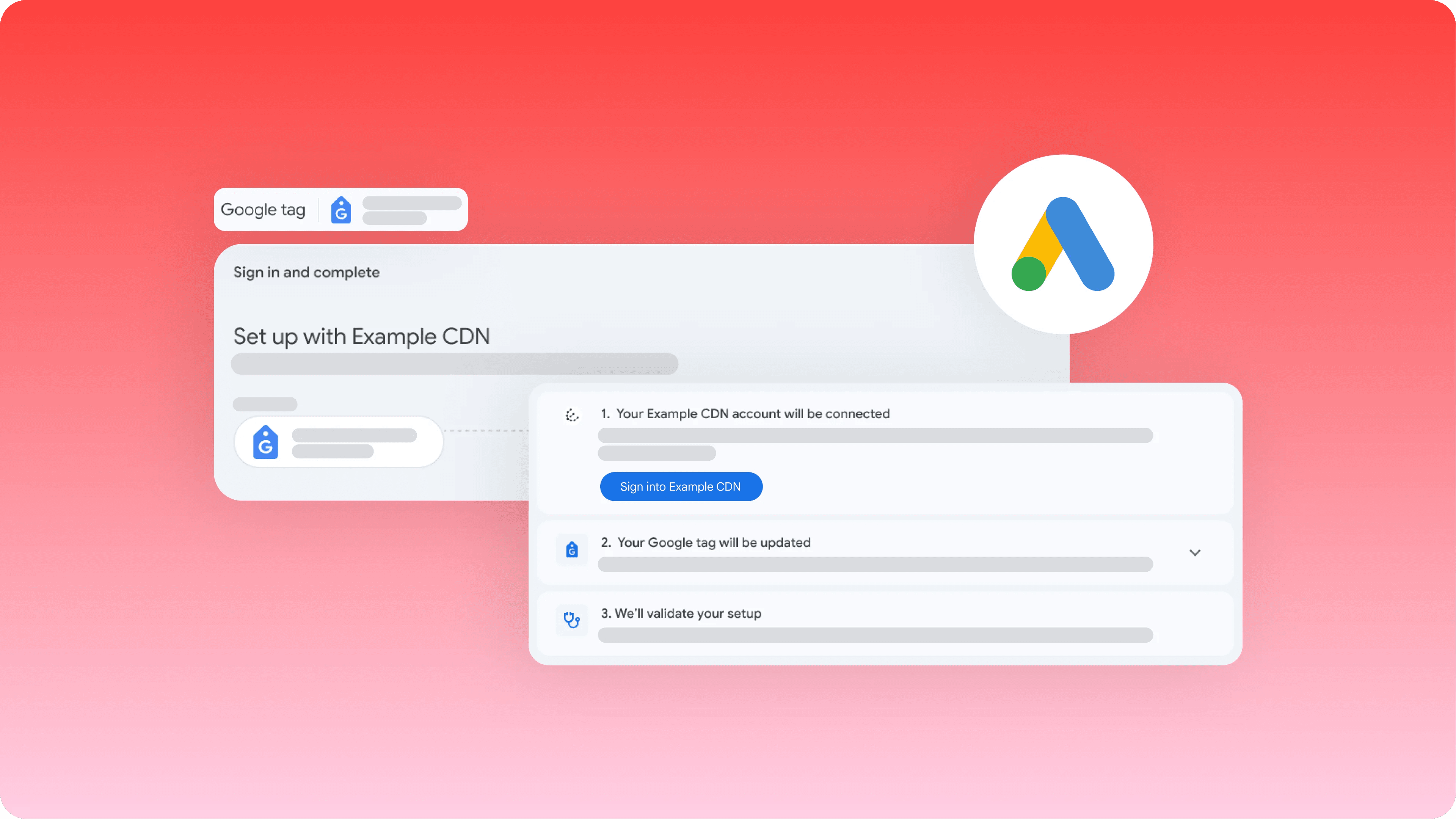
Google video·Accelerate with Google
Google tag overview
This Google tag tutorial is a useful baseline for multi-account teams because tagging and conversion coverage often determine whether cross-account reporting is trustworthy.
Google documentation·Google Ads Help
Data Manager page and Product Linking
Google's Help reference for product linking and Data Manager context.
Open Google sourceGoogle documentation·Google Ads Help
Customer Match
Google's Help reference for using first-party data with Customer Match.
Open Google sourceGoogle documentation
Google's Help reference for product linking and Data Manager context.
Google's Help reference for data source management in Google Ads.
Google's Help reference for Customer Match and first-party customer data.
- Data Manager Conversion Diagnostics: Fix Drift Before Bid ChangesFor analytics and paid media teams where conversion drift needs plumbing review before Smart Bidding moves.
- Data Manager Product Linking: Keep Sources Reliable Before ScaleFor analytics and agency teams where connected links outpace explainable ownership documentation.
- Cross-Channel Bid Optimization: Review Budget Moves Before You ReallocateFor teams about to reallocate Google Ads budget when channel ROAS rows use different counting rules.