

Search And AI Mode
Google Search Ads After GML 2026: AI Mode, Offers, and Lead Quality
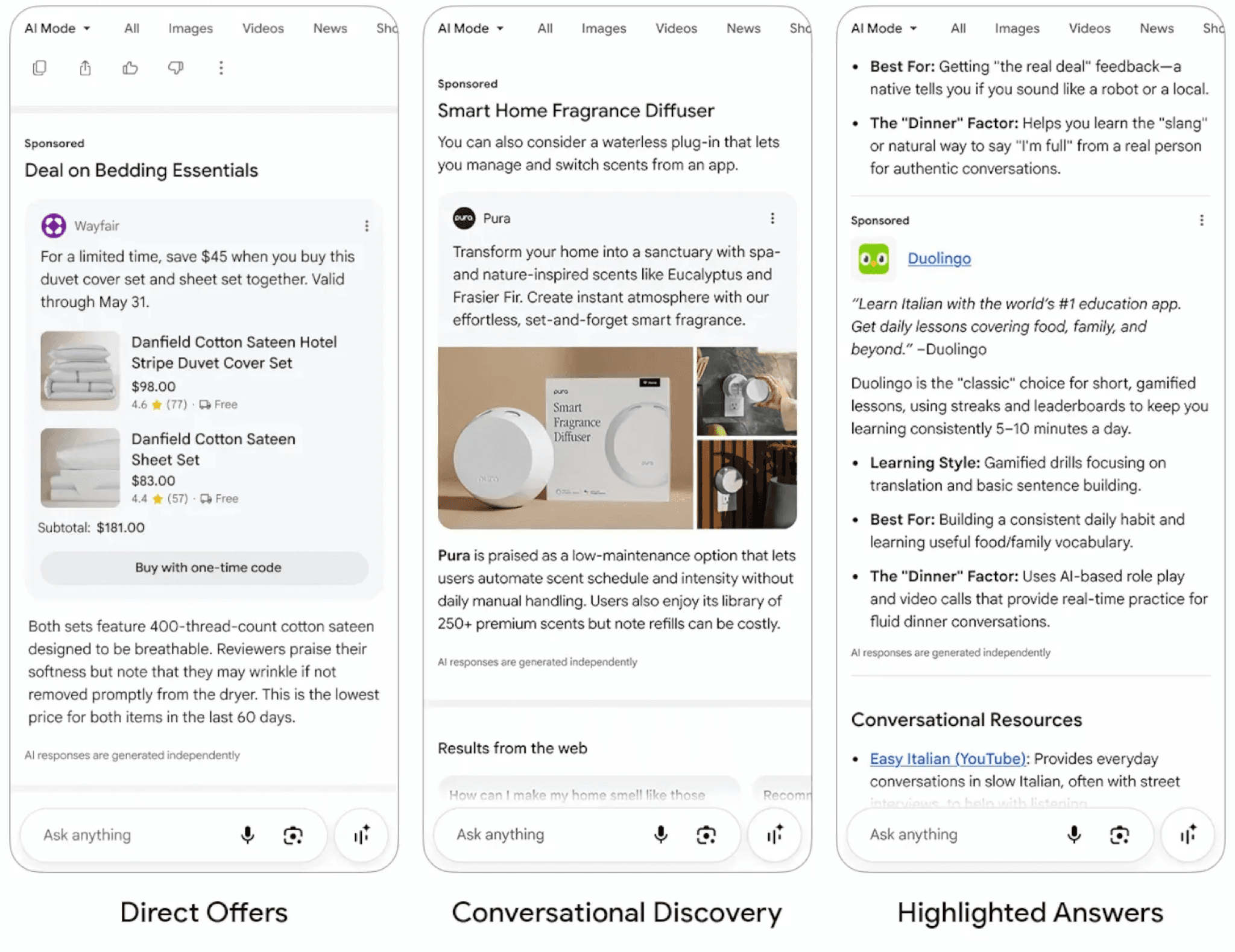
Official Search and AI Mode reference image from Google's Google Marketing Live 2026 coverage.
Search after GML 2026 raises the cost of weak landing pages, offers, and lead-quality data before AI Mode ads or AI Max expand reach.
Key takeaway
Google Search ads after Google Marketing Live 2026 should be reviewed as a broader AI-era Search shift, not as a single new format.
Google announced Gemini-built Search ad experiences around AI Mode, AI-powered Shopping ads, Business Agent for Leads, and Direct Offers, while its recap also points Search teams toward AI Max, Smart Bidding, and budget updates.
Before changing spend, teams should review Search terms, AI Max readiness, landing pages, offer quality, lead-capture paths, conversion actions, budget guardrails, and what reporting is actually documented.
AI-era Search makes weak landing pages, unclear offers, incomplete conversion actions, and thin lead-quality feedback more expensive because Google AI has more room to match intent with ads.
- Search terms, landing pages, Final URL expansion settings, text customization, lead paths, and conversion actions were reviewed before any budget move was recommended.
- AI Mode, AI Max, and AI-powered Shopping coverage were tied to the same Search quality, landing-page, offer, and conversion-action review.
- Account-eligible changes were separated from items that still needed deeper Google documentation or reporting confirmation.
Google's Search announcement points to more conversational, answer-like, and offer-aware ad experiences built with Gemini, which makes page quality and offer accuracy a Search campaign issue, not just a website issue.
Google said it is testing Conversational Discovery ads and Highlighted Answers in AI Mode. It also described AI-powered Shopping ads, Business Agent for Leads, and Direct Offers expansion as part of the next generation of Search advertising.
For paid search teams, the practical issue is not whether every format appears in every account today. It is whether Search campaigns, landing pages, offers, lead capture, AI Max controls, conversion actions, and reporting are ready before Google AI has more room to match intent with ads.
New Search surfaces punish weak inputs faster than legacy formats did.
Google video·Accelerate with Google
Prepare your campaigns for the new era of Search
Google's official Google Marketing Live follow-up session gives Search teams a current baseline for AI Max, Performance Max, and AI-era Search planning.
Search terms, Final URL expansion, offer paths, lead capture, and conversion actions determine whether expanded reach produces useful demand or just cleaner-looking volume.
| Area | What to review | Why it matters |
|---|---|---|
| Search terms and intent | Search terms, keyword coverage, broad match use, negative keywords, and high-value intent themes. | AI-assisted reach is easier to trust when the team knows which intent is worth expanding and which intent should stay excluded. |
| AI Max readiness | AI Max settings, search term matching, text customization, Final URL expansion, URL exclusions, brand settings, and tracking templates. | AI Max can expand matching and landing-page selection, so weak controls or weak pages can affect both message quality and measurement. |
| Landing pages and offers | Landing-page quality, offer match, promotions, checkout paths, form paths, calls, and mobile experience. | New Search surfaces can make offers and answers more prominent, which raises the cost of mismatched pages or unclear promotions. |
| Lead quality | Lead forms, call assets, Business Agent for Leads context, qualified leads, converted leads, enhanced conversions for leads, and CRM follow-up. | More lead capture does not help if the account cannot distinguish useful leads from low-quality volume. |
| Reporting limits | Documented Search reporting, AI Max reporting, Search terms, landing pages, assets, conversion actions, CPA, ROAS, and Change history. | Teams should explain what they can monitor now and what still needs more Google documentation. |
Open the Search terms report
Google's Search post describes Conversational Discovery ads and Highlighted Answers as AI Mode tests built with Gemini. The post says these formats can include an independent AI explainer and remain clearly labeled as Sponsored.
Those details matter for how teams explain Search changes. New formats can make the ad feel more like an answer, so landing-page fit, product clarity, service claims, and conversion tracking need to be strong before the team interprets new reach as incremental demand.
Review the pages and product or service claims Google AI may use to explain the offer. Confirm high-intent Search themes lead to the right page, form, call path, or checkout path. Keep eligibility and reporting claims caveated until Google publishes deeper feature documentation.
The pitch should wait until the account can support the format.
Google describes Business Agent for Leads as a Gemini-built brand agent inside the ad, where a person can click Chat and get answers based on the advertiser's website instead of filling out a static form immediately.
That can be useful for complex lead paths, but it also raises operational questions. Teams should confirm who owns the website answers, which lead outcomes count as primary conversions, whether enhanced conversions for leads and offline conversions are reliable, and how sales teams classify qualified leads and converted leads.
A chat path only improves lead quality when the website and CRM can support the answers it gives.
Website source quality
Review service pages, pricing language, eligibility language, disclaimers, contact paths, and follow-up promises.
Conversion definition
Separate form starts, calls, chats, qualified leads, converted leads, and closed revenue before Smart Bidding learns from the wrong outcome.
Sales feedback
Confirm CRM stages, offline conversion imports, and the owner for lead-quality feedback before scaling spend.
Google reference·Accelerate with Google
Business Agent for Leads example
Google's public Google Marketing Live recap includes Business Agent for Leads imagery for the lead-capture discussion.
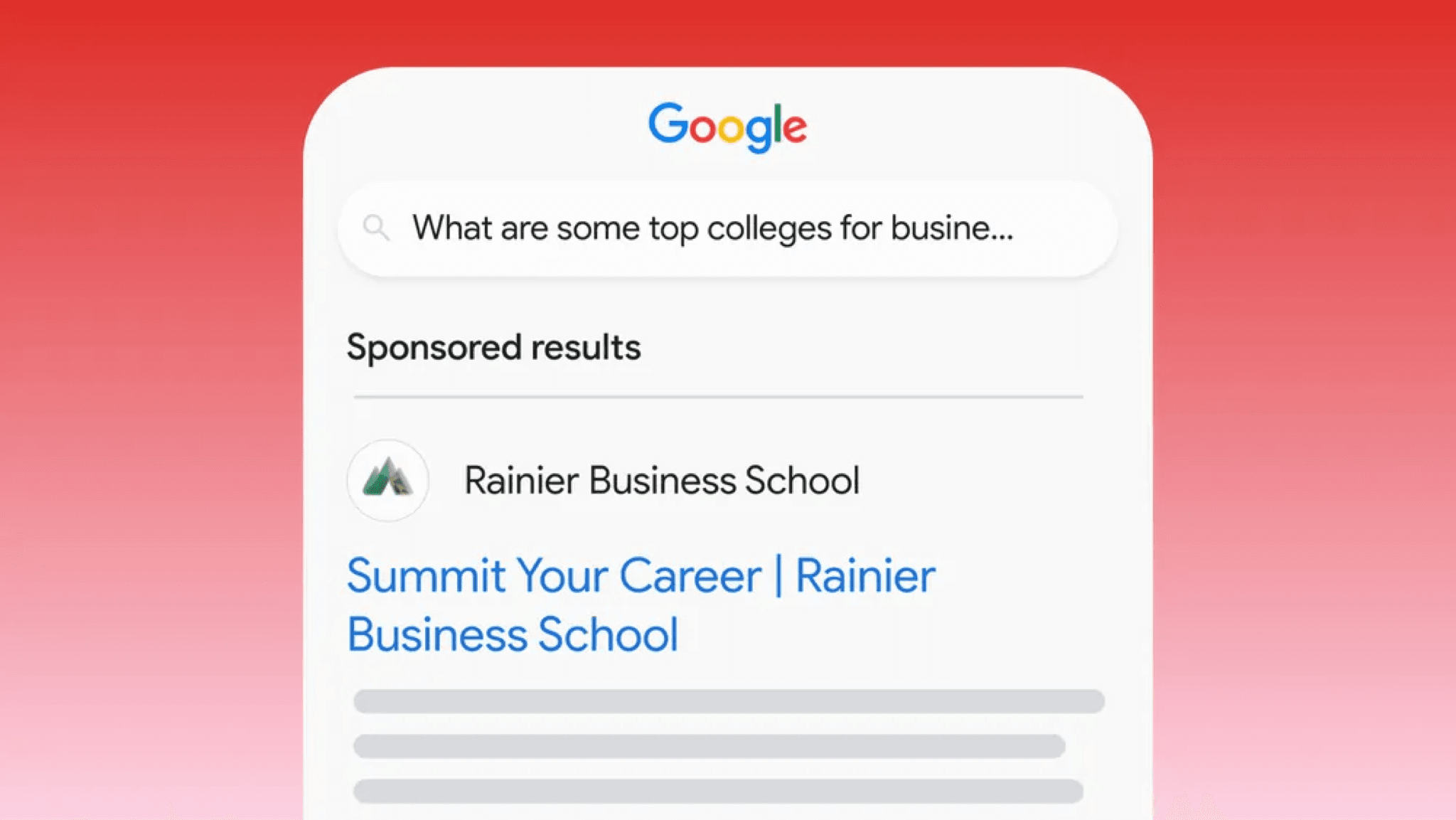
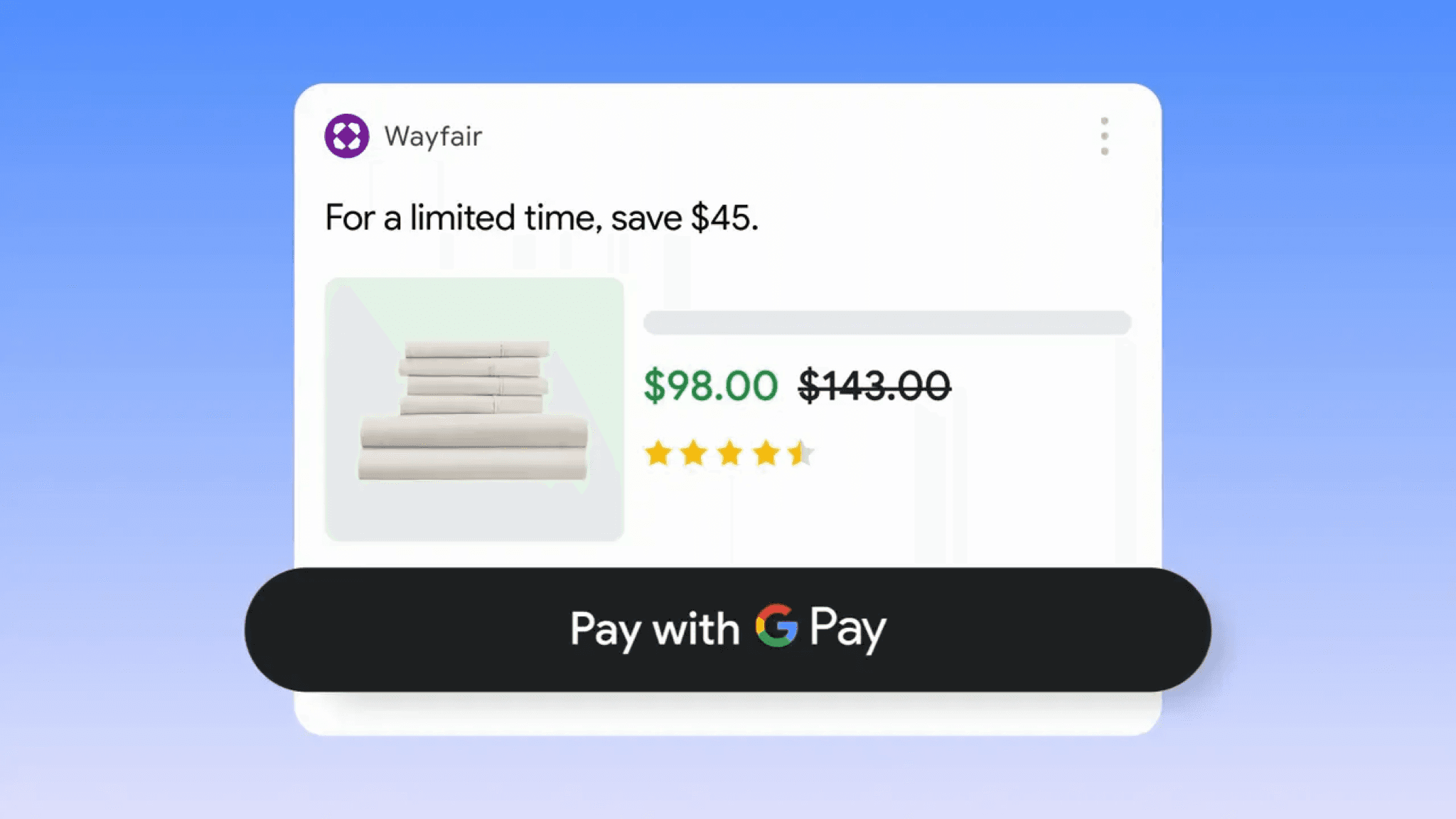
Google also described AI-powered Shopping ads and Direct Offers expansion. The Direct Offers update includes promotion bundling, native checkout integration for Universal Commerce Protocol merchants, and travel expansion language.
Search teams should avoid treating those as generic Search ads. Offer quality depends on Merchant Center product data, Promotions, eligible products, guardrails, checkout paths, Google Pay or UCP boundaries, and measurement. For ecommerce and travel advertisers, the Search review now has to include feed and checkout readiness.
Review Merchant Center product data, Product feeds, Promotions, checkout links, and offer guardrails before scaling offer-led traffic. Preserve Google's availability details for native checkout and travel expansion instead of assuming broad availability. Connect offer tests to margin, revenue quality, refunds, customer support, and conversion tracking.
Offer-led Search traffic is a commerce review, not a keyword review.
Google reference·Accelerate with Google
Direct Offers example
Google's public Google Marketing Live recap includes Direct Offers imagery for commerce and checkout readiness context.
Google's Search announcement says advertisers should build a strong foundation with AI Max for Search, AI Max for Shopping campaigns, and Performance Max. Google Ads Help also describes AI Max for Search campaigns as a suite of targeting and creative features that includes search term matching and asset optimization.
That does not mean teams should toggle everything on without a review. AI Max readiness should cover search term matching, text customization, Final URL expansion, URL exclusions, brand settings, landing-page quality, tracking templates, and reporting baselines.
AI Max is the lever you can pull now; AI Mode formats are the horizon you prepare for.
01
Set a reporting baseline
Record current Search terms, conversion actions, CPA, ROAS, lead quality, landing pages, assets, and budget behavior.
02
Review AI Max controls
Check which settings affect matching, creative, URLs, brand controls, tracking, and campaign-level review.
03
Define the hold rule
Hold or narrow the test if conversion quality, landing-page fit, or reporting confidence is not strong enough to interpret results.
Search changes after Google Marketing Live 2026 create several account checks at once: Search terms, AI Max reporting, landing pages, offer paths, conversion actions, lead-quality data, and budget exposure.
Parallel AI reads those inputs from the connected Google Ads account, writes the Search readiness review in a doc or spreadsheet your team and clients can act on, and drafts any campaign or budget change for a person to approve before it ships.
The decision should live in one finished review, not across exports and message threads.
Some Search announcements are intentionally rollout-limited. Treat them as planning inputs until Google publishes deeper feature guidance.
- Do not assume every AI Mode ad format is available in every account.
- Do not claim per-format reporting, targeting, or API support unless Google Ads Help or Google Ads API documentation confirms it.
- Do not treat native checkout, travel offers, or Business Agent for Leads as universally available.
- Do not move budget before landing pages, offers, conversion actions, lead-quality definitions, and reporting expectations are reviewed.
Google documentation
Google Ads and Commerce post on Gemini-built Search ad formats, AI Mode ad tests, AI-powered Shopping ads, Business Agent for Leads, and Direct Offers expansion.
Google's official public recap for Google Marketing Live 2026 announcement themes across Search, YouTube, measurement, commerce, apps, creative, AI-assisted shopping, and lead experiences.
Google's official Google Marketing Live follow-up learning session for Search campaign planning in the AI era.
Google Ads Help reference for AI Overviews and AI Mode ad visibility and reporting boundaries.
Google Ads Help reference for AI Max features, controls, reporting, and tracking-template cautions.
Google Ads Help reference for AI Max Search terms, landing pages, assets, keywords, and learning-period guidance.
Google Search Central guidance on crawlability, content quality, snippets, and Search visibility for generative AI features.
- Blog homeBrowse every published Google Ads guide from one editorial index.
- Google Ads AI agent: complete guideThe pillar guide covers the category definition, the adoption model, and where the agent fits real Google Ads work.
- ResourcesMove between the definition page, pricing, product walkthrough, and trust pages.
- About Parallel AISee the company mission, editorial standards, and operating principles behind the product.
- SecurityReview the public data-handling, account-connectivity, and approval-control framing used throughout the published guides.
- Author profileSee the background, specialties, and editorial responsibilities behind the published guides.
- Editorial reviewReview how pricing, trust, and capability claims are checked before public content ships.
- Google Marketing Live 2026: What Google Ads Teams Should Review FirstThe first GML response is a prioritized account review across campaign inputs, not a feature rollout checklist.
- AI Mode and AI Max Readiness Checklist for Google AdsHelpful when Search automation is on the roadmap but the account still needs measurement, copy, landing-page, and budget readiness checks.
- AI Max Expansion After GML 2026: What to Audit Before You Adopt ItHelpful when Google Ads teams need to audit AI Max readiness without losing account-level review and approval.
- AI Max Testing Playbook for Google Ads Search CampaignsFor paid search leads running a controlled AI Max experiment on a healthy Search campaign.
- AI Overviews and AI Mode Ads: Reporting Limits in Google AdsFor teams writing client updates when AI Overview and AI Mode placement reporting stays aggregated.
- Direct Offers in AI Mode: Retail Pilot Readiness for Google AdsFor ecommerce teams testing Direct Offers when economics and feeds must keep the public promise.
- Data Manager Conversion Diagnostics: Fix Drift Before Bid ChangesFor analytics and paid media teams where conversion drift needs plumbing review before Smart Bidding moves.
- Browse the GML 2026 resource hubBrowse the Google Marketing Live 2026 resource hub for the related Search, AI Max, Shopping, Demand Gen, bidding, data, and measurement guides.