

Measurement Readiness
Google Tag Upgrade Checklist After GML 2026
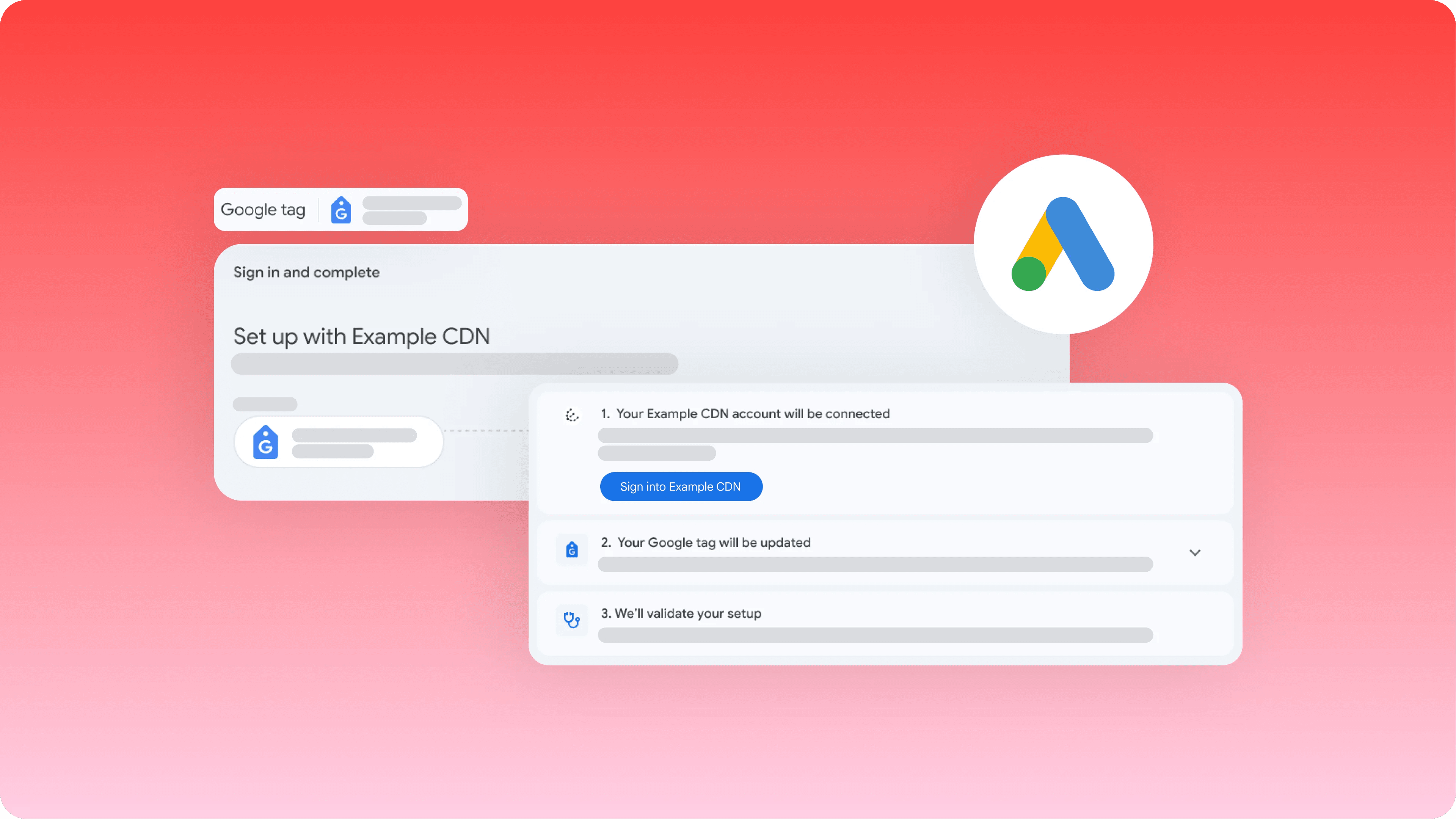
Official Google Marketing Live 2026 Google Tag Gateway image from Google's public recap.
Google Tag Gateway routes measurement through your domain for stronger signals, but the CDN, consent, and conversion map become yours to maintain before Smart Bidding moves.
Key takeaway
Thursday's weekly review opens on a tROAS campaign that improved while lead quality softened, and the analytics lead traces the shift to a tag upgrade finished Tuesday without a post-change read. Google's GML 2026 measurement post describes a simplified Google tag upgrade flow and Google Tag Gateway routing tags through your own CDN, load balancer, or web server without retagging pages. That is the tension: first-party routing can strengthen conversion signals for Smart Bidding, but the path now runs through infrastructure the paid media team does not control alone.
The reframe is ownership, not a checkbox. Tag Gateway moves measurement onto your domain for durability against browser and network loss. The cost is ongoing ownership of destinations, consent setup, Tag Diagnostics, Tag coverage, conversion actions, enhanced conversions, Data Manager links, and the rollback path before CPA, ROAS, or budget targets move. Parallel AI reads the connected Google Ads account, writes the measurement review in a doc or spreadsheet, and drafts campaign notes for a person to approve.
Checked against current product behavior, account-review tools, and official Google materials so the explanation matches the real review process and live product boundaries.
- Google's Tag Gateway rollout note describes first-party routing without retagging and cites an illustrative 11 percent signal uplift from Google's April 2025 performance data; teams should treat uplift as directional until their account proves it.
- Tag Diagnostics, Tag coverage, Google Tag Assistant, consent setup, and conversion action mapping were treated as joint gates before bid or budget changes.
- Parallel's role stays limited to connected account review, finished measurement notes, and drafted changes held for human approval.
Most tag problems used to look like missing pixels on checkout. Tag Gateway problems look like a healthy Tag coverage summary and a broken load balancer rule that nobody in the marketing standup owns. Google's Tag Gateway Help page says advertisers can run Google tags client-side or server-side through their own CDN, load balancer, or web server, with no changes required to existing tag code on pages. The measurement path moved. So did the on-call roster.
DEFINITION
Google Tag Gateway for advertisers
A Google Ads measurement feature that routes Google tag traffic through the advertiser's own domain infrastructure before encrypted data reaches Google. Google's rollout documentation emphasizes first-party routing, signal resilience, optional confidential computing protections, and simplified setup including CDN partner integrations. It is not a substitute for consent configuration, conversion action design, or post-change reporting discipline.
Google Ads Help: Enhance conversion measurement with Google tag gateway for advertisers
The win is durability. Third-party tag requests face more friction every year. Serving tags from your own domain can recover script loads and conversion events that never reached Google Ads. Google's published performance note cites an illustrative 11 percent signal uplift for advertisers who configured Tag Gateway in April 2025 global data. Numbers are illustrative. The mechanism is fewer dropped requests on the path you control.
The cost is ownership. Destinations still need correct Google Ads and Google Analytics links. Consent mode still governs what may fire. Duplicate events still poison Smart Bidding. Tag Gateway adds CDN, cloud, or web server configuration, permissioning, and monitoring that marketing cannot hand-wave to an agency retainer line item.
Google's GML 2026 measurement post also advertises a simplified tag upgrade flow with no coding required for ordinary Google tag settings. That flow and Tag Gateway solve different problems. Settings cleanup fixes mislinked destinations. Gateway fixes routing fragility. Teams that conflate the two often upgrade Tuesday and debate tROAS Thursday without opening Tag Diagnostics.
Illustrative math: a lead-gen account on tCPA bidding shows CPA improving from $84 to $76 over ten days after Gateway activation while qualified lead rate drops from 41 percent to 33 percent. Tag coverage looks green. Conversion volume rises. Sales rejects more names. Numbers are illustrative. The mechanism is stronger signal volume with unchanged conversion quality definitions.
Where Google's public Help pages do not spell out a specific CDN workflow for your stack, the analytics and infrastructure owners should verify live configuration rather than assume parity with Google's Cloud Load Balancer walkthrough.
A stronger signal with the same broken conversion map still misleads Smart Bidding.
Once the domain owns the route, the weekly review starts in diagnostics, not in the bid strategy report. Google's Tag Diagnostics Help page covers tag quality status, consent alerts, untagged pages, and configuration order issues. Google's Tag coverage summary Help page adds page-level missing tags and no recent activity flags. Campaign teams should not interpret CPA or ROAS movement until those surfaces agree on the same week.
Hold bid and budget changes until the team can explain whether movement came from measurement quality, conversion quality, or auction performance. That sentence is boring until a Gateway upgrade coincides with a tROAS target change and nobody can separate the two in change history.
Data Manager links belong in the same review when first-party audiences or offline imports feed Smart Bidding. Google's GML 2026 post positions Data Manager as the connective tissue for site, app, store, and CRM data. Gateway strengthens site events. Data Manager tells you whether those events match the customer record the business trusts.
Rollback criteria should be written before activation: which CPA, ROAS, or qualified-lead floor triggers reverting Gateway or pausing bid strategy edits, and who can approve that rollback with the CDN owner on the thread.
Measurement surfaces mapped to owners.
| Surface | What it answers | Owner to name |
|---|---|---|
| Tag Diagnostics | Quality status, consent alerts, config order | Analytics or tag owner |
| Tag coverage summary | Missing tags, inactive pages, URL gaps | Web or CRO owner |
| Google Tag Assistant | Live event firing on key URLs | Paid media or analytics lead |
| Conversion actions | Primary, secondary, enhanced conversions | Paid media lead with sales input |
Open Tag Diagnostics after any tag or Gateway change
With domain ownership as the frame, the pre-activation review is short enough for a Monday measurement standup.
Confirm Google tag destinations for Google Ads, Google Analytics, Campaign Manager 360, or other linked products and name who may edit each link.
Verify Tag Diagnostics, Tag coverage, and Google Tag Assistant on checkout, lead form, and top paid landing URLs the same week Gateway activates.
Review consent setup, primary and secondary conversion actions, enhanced conversions, duplicate events, and conversion lag against the pre-change baseline.
Assign CDN, cloud, or web server owners plus marketing approvers for rollback if qualified leads, purchase value, or ROAS move without a performance story.
- Map destinations and owners before Gateway activation.
- Run Tag Diagnostics and Tag coverage on key URLs the same week.
- Compare conversion actions and consent setup to the pre-change window.
- Write rollback criteria before any bid or budget edit.
Green diagnostics with unnamed owners still fail the ownership test.
Activate when first-party routing is the real constraint, infrastructure owners are named, diagnostics are clean enough to trust, and rollback rules exist before bid targets move. Wait when GA4 links, conversion actions, consent alerts, duplicate events, or Tag Diagnostics still make performance ambiguous. Rebuild when the account cannot tie Google Ads outcomes to qualified leads, purchase value, or offline conversions regardless of routing.
Activate when
- CDN, cloud, or web server owners accept ongoing monitoring responsibility.
- Tag Diagnostics, Tag coverage, and conversion action mapping are clean or owned with dated fixes.
- Rollback criteria and a post-change read window are written before tCPA or tROAS edits.
Wait when
- Gateway is a substitute for missing conversion actions or broken consent setup.
- Nobody can explain which reports should move after activation.
- Bid or budget changes are queued before a full conversion lag window completes.
Tag Gateway decisions are a connected-account review Parallel AI handles well. The agent pulls conversion actions, CPA, ROAS, change history, and campaign performance from the connected Google Ads account, pairs that read with Tag Diagnostics and coverage notes your analytics team documents, and writes activate, wait, or rebuild rows in a doc or spreadsheet with owner and rollback columns. If the call is to pause a bid strategy edit or draft a conversion action note, it waits for a person to approve that change. Upgrade clicks without a diagnostics owner recreate the same Thursday argument. See for linked first-party data context. On Monday morning, open Tag Diagnostics and conversion action reports together, log any post-Gateway movement against qualified lead or purchase value floors, and send one activate, wait, or rebuild line before anyone moves tCPA or tROAS targets.
Google documentation
Google's GML 2026 measurement post covering the Google tag upgrade flow, Data Manager, Google Tag Gateway, and Meridian context.
Google's reference for the Google tag, destinations, access, data quality, and consent considerations.
Google's setup reference for Google Ads, Google Analytics, Campaign Manager 360, Google Tag Manager, verification, and troubleshooting.
Google's reference for Tag Diagnostics, tag quality status, consent alerts, untagged pages, and tag troubleshooting.
Google's reference for page-level Google tag coverage, missing tags, no recent activity, and URL-level review.
Google's reference for using Tag Assistant to verify whether the Google tag is present and sending events.
Google's setup reference for Google Tag Gateway, first-party routing, Google Cloud permissions, and configuration.
Google's rollout note for Google Tag Gateway, first-party routing, signal resilience, and no-retagging setup context.
Official Smart Bidding reference for Google's automated bid optimization systems.
- Data Manager Conversion Diagnostics: Fix Drift Before Bid ChangesFor analytics and paid media teams where conversion drift needs plumbing review before Smart Bidding moves.
- Google Ads Data Manager: First-Party Data Source ReviewFor marketing and RevOps teams where list uploads outpace stewardship and match rate monitoring.
- Ask Advisor in Google Analytics for Google Ads Teams: What to Review NextFor analytics diagnosis that must become a clear paid media next step.
- Web-to-App Acquisition Measurement Guide for Google AdsFor app growth teams deciding whether Google Ads can optimize web acquisition toward real in-app value.