

Can AI Manage Google Ads Campaigns for Agencies?
The three senses in which AI manages agency Google Ads work, what the agency stays accountable for under each, and where the full agency guide picks up.
4 min readBy Editorial Team
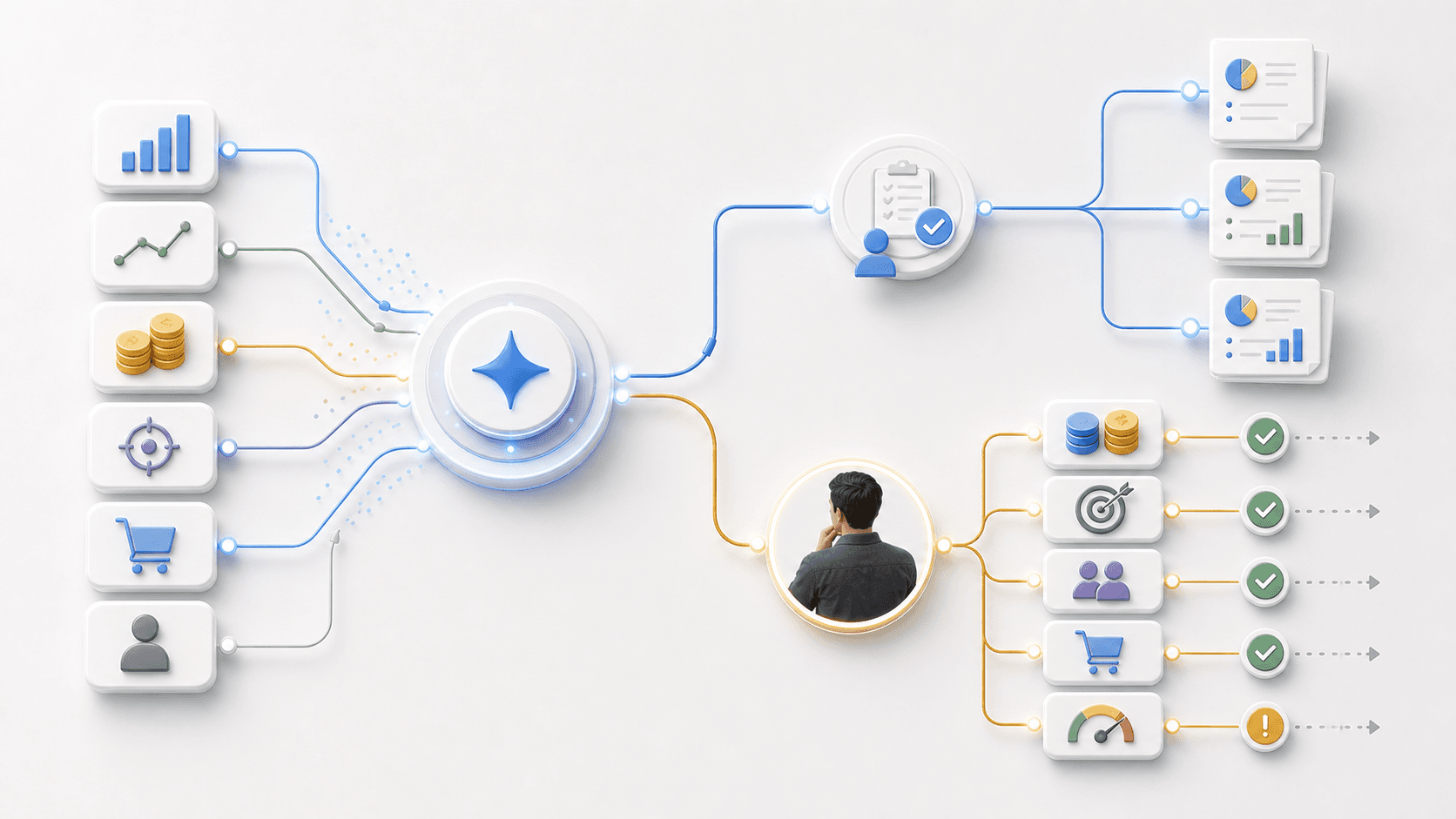
Yes, in three different senses. Google's own automation manages bidding and matching in client accounts that use Smart Bidding, AI Max and Performance Max, and applies the recommendation types you allow. Manual bidding leaves bid decisions with the advertiser, but does not by itself rule out AI Max or other automated features. Managed and autonomous services such as groas and Ryze's autopilot run accounts day to day, including bids, budgets and keywords, within the mandate and guardrails agreed with the agency. Google's Ask Advisor reviews, investigates, reports and implements suggestions you accept inside an eligible client account. Parallel AI does that work across every client account you connect and the manager account above them, and makes the changes you allow in each chat.
What stays with the agency under all three is accountability rather than every control: deciding which conversions count for the client, what the target reflects, what the budget can be, what the client is told, and under whose authority and which tool's controls changes are made. Tools and services can operate those settings when given the mandate; the mandate is the agency's. The Google Ads AI agent for agencies covers access, the weekly loop, client reporting, approvals and pricing at your account count.
The three kinds of AI management, and what the agency stays accountable for
| Kind | Examples | What it can operate | What the agency remains accountable for |
|---|---|---|---|
| Google's own automation | Smart Bidding, AI Max, Performance Max, auto-apply recommendations, Ask Advisor's accepted suggestions | Bids, matching, text, channel and asset choice, and, where allowed, the settings a recommendation or accepted suggestion changes | The conversion definitions, the target and budget mandate, the exclusion policy, and which recommendation types are on |
| Managed and autonomous services | groas, done for you, and Ryze Paid Ads with optional managed campaigns | Day-to-day changes to bids, budgets and keywords, within agreed guardrails or approval controls | The mandate and guardrails, the client relationship, and the review of what was done |
| Assistants and agents | Parallel AI across every connected account, and Ask Advisor inside eligible client accounts | Reading, investigating, reporting and making the changes you approve or allow | The decision on each change, the client narrative, and everything outside the account |
What the agency stays accountable for
- Which conversion actions count and what value each carries, even where a tool proposes or, with permission, changes them; conversion-based bidding depends on these definitions.
- The target and budget mandate, which come from the client's margin and plan; a tool can set the numbers under that mandate, and the agency answers for them.
- The exclusion policy: brand and URL exclusions, negative keywords and placement exclusions, which bound the automation whoever enters them.
- The client conversation: what happened, why, what the agency will do, and what it will not do yet.
- Who may authorize changes to a client's money, and under which tool's controls. Parallel holds a draft for an authorized person; other products execute within agreed limits. Either way, the agency sets the authority.
Next read
The agency guide covers manager account access, the workspace allowlist, the weekly portfolio review with owners, client reporting, and what the Team and Agency plans cost at your account count. For the tools by job, the agency stack guide.
Questions and answers
Can AI fully manage Google Ads campaigns for an agency?
Managed services such as groas run accounts within guardrails agreed with the agency, and Google's automation runs bidding and matching in accounts that use it. Tools and services can set targets, budgets, exclusions and conversion actions under that mandate. What remains the agency's is accountability: the definitions, the mandate, the client narrative, and the decision about who may authorize changes and under which controls. In Parallel a change waits for an authorized person; other products execute within their own limits.
Where is the full agency framework?
The full framework is the agency evaluation guide.