

Shorts Readiness
YouTube Shorts Efficient Reach Campaign Checklist
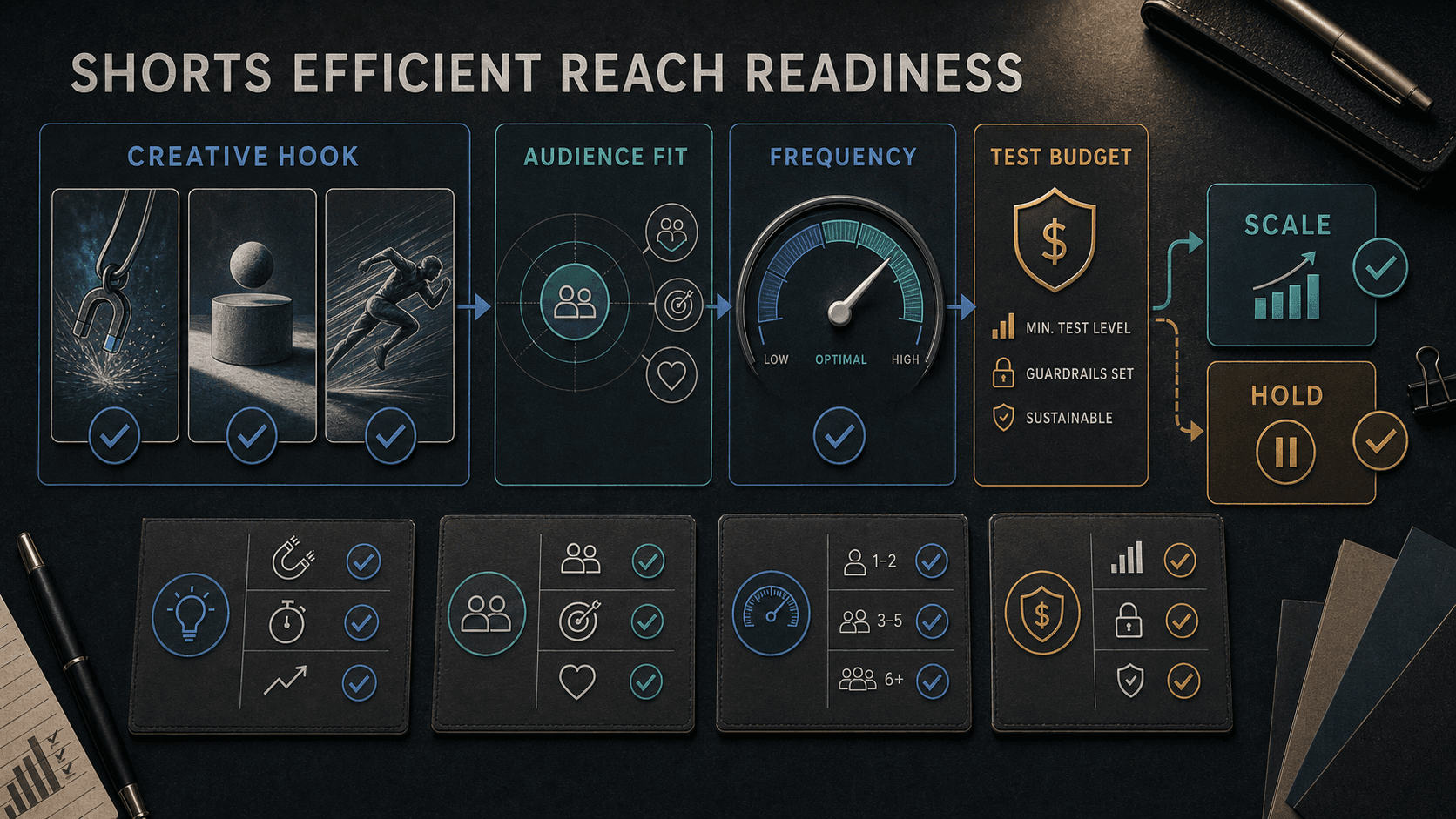
Editorial graphic for YouTube Shorts efficient reach readiness planning.
Efficient reach on YouTube Shorts is a frequency and audience decision before a format decision: vertical creative, reach, CPM, budgets, brand lift, views, and reporting.
Key takeaway
The creative team arrives with a cropped horizontal hero ad and asks to scale Shorts efficient reach because the CPM looked cheap in a one-day read. The media lead asks who should see it twice in seven days and what frequency cap protects the brand. Silence. Efficient reach on Shorts is a frequency and audience decision before it is a format decision.
YouTube Shorts should be tested in efficient reach planning only when the creative is built for vertical viewing, the audience and frequency goals are clear, the budget is scoped, and the reporting plan separates reach metrics from conversion or ROAS expectations.
Google Ads Help documents Shorts inventory inside Video Reach campaigns. The checklist still covers vertical video format, creative hook, audience segments, reach, frequency, CPM, views, brand lift, content suitability, budgets, campaign reports, and the criteria for scale or revision.
Checked against current product, pricing, trust, and official Google materials so the explanation stays tied to the live product and current Google Ads context.
- Google Ads Help and Accelerate with Google supplied Shorts and Video Reach campaign boundaries.
- Reach tests were separated from conversion and ROAS claims unless the campaign was designed to measure them.
- Parallel claims stay limited to post-test summaries, format notes, and human-reviewed next steps.
Cheap CPM is not a strategy. It is an outcome of audience breadth and frequency choices you have not written down yet.
DEFINITION
Efficient reach on YouTube Shorts
A Video Reach campaign test that buys Shorts inventory to maximize qualified audience reach at a planned frequency. Google Ads Help describes buying YouTube Shorts ads with Video Reach campaigns. The media plan should name audience segments, frequency expectations, and what reach metrics will justify scale before vertical creative enters the conversation.
Google Ads Help: Buy YouTube Shorts ads with Video Reach campaigns
Write the audience job first: net-new awareness, competitive conquest, or existing-customer reinforcement. Each job carries a different frequency tolerance and a different definition of efficient reach.
Set a frequency band before launch. Illustrative plan: 2 to 3 impressions per user over 7 days for awareness, tighter for small remarketing pools. Numbers are illustrative. The mechanism is that efficient reach without a frequency band is just spend with motion.
Scope the test budget against that band. A $3,200 weekly test that reaches too broad an audience too fast will show a flattering CPM and a useless brand read. Budget is the guardrail that keeps frequency honest.
Only then review vertical creative. Confirm the asset is built for vertical viewing, the hook lands in the opening seconds, and content suitability settings match the brand's placement standards. A cropped horizontal spot can clear trafficking while failing the Shorts viewing behavior the campaign is buying.
Separate reach reporting from conversion or ROAS expectations unless the campaign was designed to measure lower-funnel outcomes. Video Reach efficient reach is a top-funnel read. Treating views as proxy purchases is how teams scale the wrong lesson.
Content suitability settings deserve the same preflight as audience and frequency. A reach plan that ignores placement standards can deliver efficient CPM with the wrong adjacency story for the brand.
Write the post-test owner before launch. Someone should own the weekly reach and frequency read, the creative revision call, and the scale-or-hold note when the test ends.
Audience and frequency are the strategy. Vertical format is the execution.
Once audience and frequency are defined, the scale call should read like a media plan review, not a creative preference vote.
Scale when reach and frequency match the written plan, CPM stays inside the band you would accept for that audience, and the campaign report plus any brand lift study answers the question you actually asked.
Revise when creative format is weak but audience and frequency looked sound. A strong media plan with a weak hook is a production fix, not a reason to abandon Shorts inventory.
Hold when frequency rises without a credible audience read or when the team starts importing conversion or ROAS language into a reach-only test. That hold protects the next test from a polluted conclusion.
Illustrative readout: 1.8 million views, frequency 4.6 in 10 days, CPM $6.10, brand lift study not fielded. Numbers are illustrative. The scale call is hold until frequency is brought back inside plan, not scale because views climbed.
Brand lift, where fielded, should answer the same audience and frequency question the media plan asked on day one. A lift read that ignores who was overexposed is another form of efficient reach theater.
Views and CPM should be read as efficiency diagnostics, not as standalone success metrics. Cheap reach with the wrong frequency profile is still a failed test even when the dashboard looks active.
| Signal | Scale when | Revise or hold when |
|---|---|---|
| Creative format | Vertical creative fits Shorts behavior and the opening hook is strong. | The asset is a cropped horizontal video or the message does not land quickly. |
| Reach and frequency | Reach, frequency, CPM, and audience fit match the media plan. | Frequency rises without a useful audience or brand read. |
| Reporting | The campaign report, brand lift plan, and post-test summary answer the test question. | The team is trying to infer conversion or ROAS results from a reach-only test. |
Scale the lesson the test design can actually teach.
Shorts tests fail in handoffs when media, brand, and creative each keep a different screenshot. One summary fixes that.
Parallel AI fits when creative and media teams need format notes, campaign goals, and post-test results in one review before expanding YouTube Shorts spend. The agent reads connected campaign context and finishes the scale, revise, or hold summary in a doc or spreadsheet.
Drafted budget or campaign notes wait for a person to approve them. Parallel does not traffic YouTube Shorts inventory or replace Google's campaign reports. It shortens the path from reach metrics to a decision the whole pod can see.
See peak points YouTube ads checklist. On Monday morning, open the Video Reach campaign report, write the audience job, the frequency band, and the one metric that would justify more spend. If any field is blank, hold budget before you revise creative.
Keep a single post-test doc linked from the media plan so brand, creative, and paid media reference the same reach and frequency read instead of three conflicting summaries.
Name the campaign report date range in that doc so nobody compares a 7-day reach read to a 30-day creative refresh plan.
That single discipline keeps Shorts efficient reach tests comparable week to week.
Frequency planned beats CPM celebrated.
Google documentation
Google's Shorts documentation for when Shorts inventory is available inside Video Reach campaigns.
Google's business-learning guide for Video Reach campaigns and related format planning.
- Blog homeBrowse every published Google Ads guide from one editorial index.
- Google Ads AI agent: complete guideThe pillar guide covers the category definition, the adoption model, and where the agent fits real Google Ads work.
- ResourcesMove between the definition page, pricing, product walkthrough, and trust pages.
- About Parallel AISee the company mission, editorial standards, and operating principles behind the product.
- SecurityReview the public data-handling, account-connectivity, and approval-control framing used throughout the published guides.
- Author profileSee the background, specialties, and editorial responsibilities behind the published guides.
- Editorial reviewReview how pricing, trust, and capability claims are checked before public content ships.
- Non-Skippable Video Reach Campaigns: When CTV Teams Should TestFor CTV and YouTube teams deciding whether non-skippable Video Reach deserves a guarded format test.
- Peak Points YouTube Ads Checklist for Creative and Media TeamsFor brand and video teams deciding whether Peak Points solves an attention problem or adds premium CPM without a read.
- Asset Studio Veo 3 Video Guide: Review Generated Video Before Campaign UseHelpful when Asset Studio generated video is ready to test but the team still needs brand, policy, tier, and campaign-use governance.
- Should You Opt Out of AI Voice-Over in Performance Max?Helpful when Performance Max narration could speed sound-on coverage but still needs brand, product, policy, and performance review.