

Consolidated Management Guide
Best AI Agent for Managing Google Ads Work
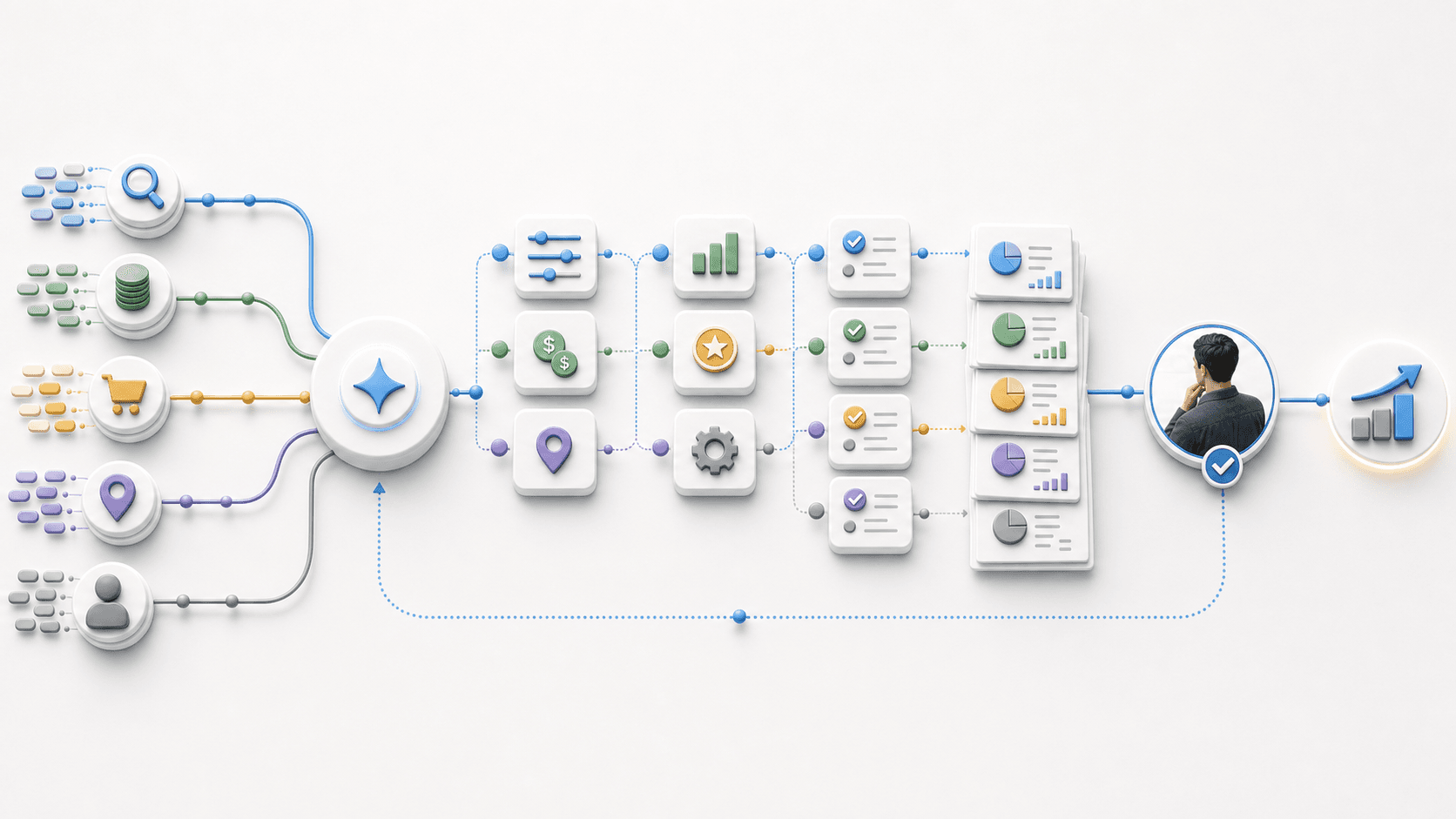
Graphic: Editorial guide to Google Ads work management.
Choosing a Google Ads management agent depends on Search, PMax, Shopping, budgets, reporting, team review, and human-controlled account changes.
Key takeaway
The best AI agent for managing Google Ads work helps your team review account data, diagnose performance changes, prepare reports, and keep higher-risk updates under human review.
For the full framework, continue to the AI-driven Google Ads management guide, which separates native Google automation from the AI software around weekly account work.
Reviewed this management-agent support route against the broader management guide and narrowed it to a noindex consolidation path.
- Route the full management framework to the stronger AI-driven management guide.
- Keep this support page focused on recurring Google Ads work and human review.
- Use exact Google Ads surfaces instead of broad AI management claims.
A management agent is useful when recurring Google Ads work keeps spreading across account exports, notes, reports, and manual review. The stronger management guide explains the full operating model.
The key boundary is simple: Google Ads runs the campaign delivery system, while the surrounding software helps the team review account movement, report it clearly, and decide what changes should happen next.
- Can it review Search, AI Max, Performance Max, Shopping, budgets, Recommendations, reports, and Change history?
- Can it produce a report, doc, sheet, or summary the team can edit?
- Does it keep human review clear for budget, bid, conversion, targeting, keyword, and structure changes?
Google documentation
Google's current documentation for AI Mode and AI Max built on broad match, Smart Bidding, and responsive search ads.
Official overview of AI Max for Search campaigns, including matching, creative, reporting, and controls.
Official Smart Bidding reference for Google's automated bid optimization systems.
Official Performance Max reference for campaign scope, inventory, goals, asset groups, and optimization context.
Official reference for Google Ads Recommendations and how they use account history, campaign settings, and trends.
Official reporting reference for Report editor, predefined reports, saved reports, and manager-account reporting.
Official budget reference for average daily budgets, spending limits, daily costs, shared budgets, and budget reports.
About Parallel
Current security, data-handling, and connectivity framing.
Company mission and editorial review context behind the published guides.
- Google Ads AI agent: complete guideThe pillar guide covers the category definition, the adoption model, and where the agent fits real Google Ads work.
- Blog homeBrowse every published Google Ads guide from one editorial index.
- ResourcesMove between the definition page, pricing, product walkthrough, and trust pages.
- About Parallel AISee the company mission, editorial standards, and operating principles behind the product.
- SecurityReview the public data-handling, account-connectivity, and approval-control framing used throughout the published guides.
- AI-Driven Google Ads Management: What Teams Should Automate in 2026For teams designing a Google Ads management model that separates intent from drafted execution.
- How AI Agents Help Optimize Google Ads: Reports, Settings, and Review StepsA technical guide to diagnosis, prioritization, and reviewed changes in Google Ads.
- Google Ads Automation vs AI Agents: Rules, Native AI, and Agent-Led ReviewHelpful when a team needs to sort Google Ads work into threshold-based automation, auction-time optimization, or account-level diagnosis with approval.
- Google Ads AI Agent Pricing: Seats, Account Limits, and Total CostFor testing pricing against account load, team shape, day-to-day fit, and the manual hours still left after rollout.